
10 Dinning Room Ideas Small Area Decor
Introduction
Small dining spaces require thoughtful planning to ensure both functionality and visual balance. Many homes and apartments include compact dining areas that must accommodate seating, movement, and storage within limited square footage. This makes efficient design essential. Pinterest ideas for small dining room decor focus on maximizing space while maintaining a clean and aesthetic appearance. These ideas combine DIY methods, smart organization, and modern design principles to create practical solutions. This article explains how to transform a small dining area using simple materials and step by step techniques. It covers layout strategies, furniture selection, lighting, and decorative elements that improve usability without overcrowding the space. Readers will learn how to create a comfortable and organized dining environment using beginner friendly approaches. Each concept emphasizes realistic execution and adaptable design. The goal is to provide clear guidance for creating a functional and visually appealing dining area that fits within limited space while maintaining a cohesive home decor style.
Why This Idea Is Trending or Useful
Small dining room decor ideas are widely used because compact living spaces have become more common. Many people need practical solutions that improve functionality without requiring large areas. Pinterest ideas highlight creative ways to optimize limited space while maintaining a modern and aesthetic look. These designs focus on efficient layouts, multi-purpose furniture, and minimal clutter. The DIY appeal makes these ideas accessible to beginners who want to improve their home decor without complex tools or permanent changes. The use of lightweight materials and simple setups allows easy adjustments over time. Modern design trends emphasize minimalist style, clean lines, and open layouts, which align well with small dining spaces. These approaches also support better organization by reducing unnecessary items and improving storage efficiency. The combination of budget ideas, easy project execution, and visual improvement makes these concepts highly relevant. As a result, small dining room decor continues to be a practical and adaptable solution for modern living environments.
Materials and Preparation
Preparing for a small dining room decor project requires careful selection of materials and tools. Common materials include compact furniture, foldable tables, stackable chairs, wall shelves, mirrors, and lighting elements. Decorative items such as table runners, plants, and wall art can enhance the overall aesthetic. Basic tools may include measuring tape, level, screwdriver, and adhesive hooks. Planning begins with measuring the available space to determine the correct size and placement of furniture. This step prevents overcrowding and ensures smooth movement within the area. Surfaces should be cleaned before applying any adhesive elements to ensure proper attachment. Layout planning is essential for maintaining balance and functionality. Choosing a consistent color scheme supports a cohesive design. It is also useful to prioritize multi-purpose items that save space. Organizing materials in advance simplifies the process and reduces delays. Proper preparation ensures efficient execution and helps achieve a clean, well-structured dining area.
Idea 1: Foldable Wall-Mounted Dining Table
How to Create
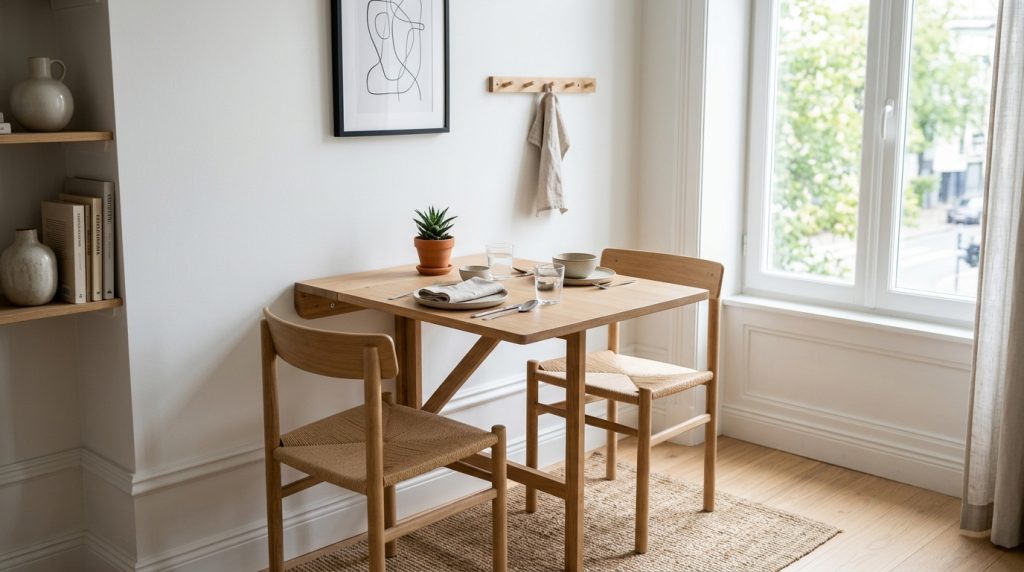
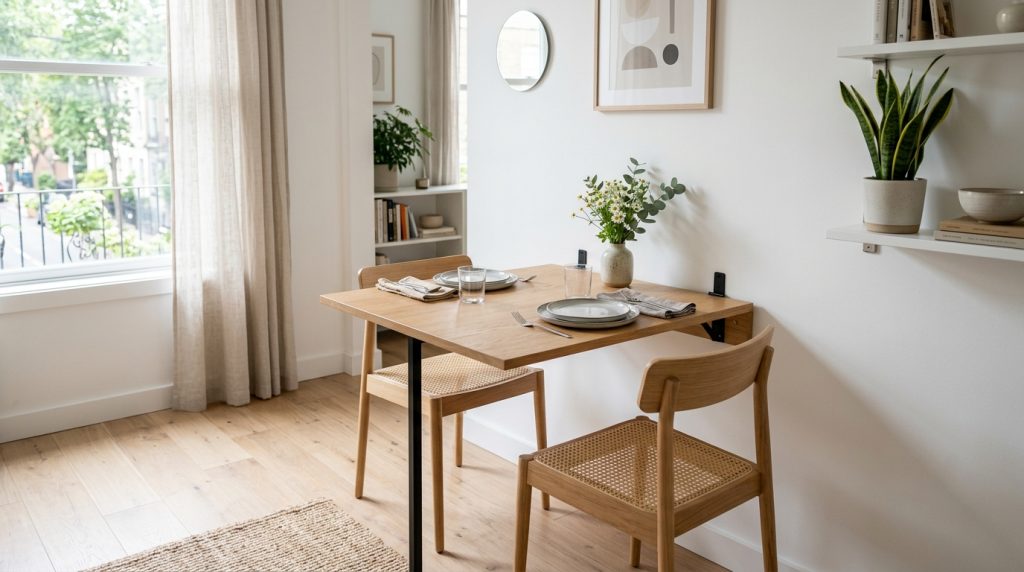
A foldable wall-mounted dining table is a practical solution for maximizing space in small dining areas. This design allows the table to be folded against the wall when not in use, creating more room for movement. Pinterest ideas often highlight this approach as an efficient way to combine functionality and minimal design. The table serves as a dining surface and can also function as a workspace if needed. This concept supports a minimalist style by reducing unnecessary furniture. It is suitable for studio apartments or compact homes where space is limited. The design keeps the area open and uncluttered while still providing essential functionality. Materials such as lightweight wood or engineered boards are commonly used. The visual appearance can be customized with neutral tones or simple finishes. This idea improves both usability and organization by ensuring that space is used only when required.
The step by step setup begins with selecting a sturdy foldable table design. The wall surface should be measured and marked to determine proper height and alignment. Mounting brackets are attached securely using appropriate tools. The table is then fixed to the brackets, ensuring stability when opened. It is important to check weight capacity before use. When not needed, the table can be folded flat against the wall. Chairs can be stored separately or replaced with foldable seating options. Regular maintenance involves checking hinges and cleaning surfaces. This DIY tutorial is beginner friendly but requires careful installation. It provides an effective way to create a functional dining space without occupying permanent floor area.
Idea 2: Corner Dining Setup
How to Create
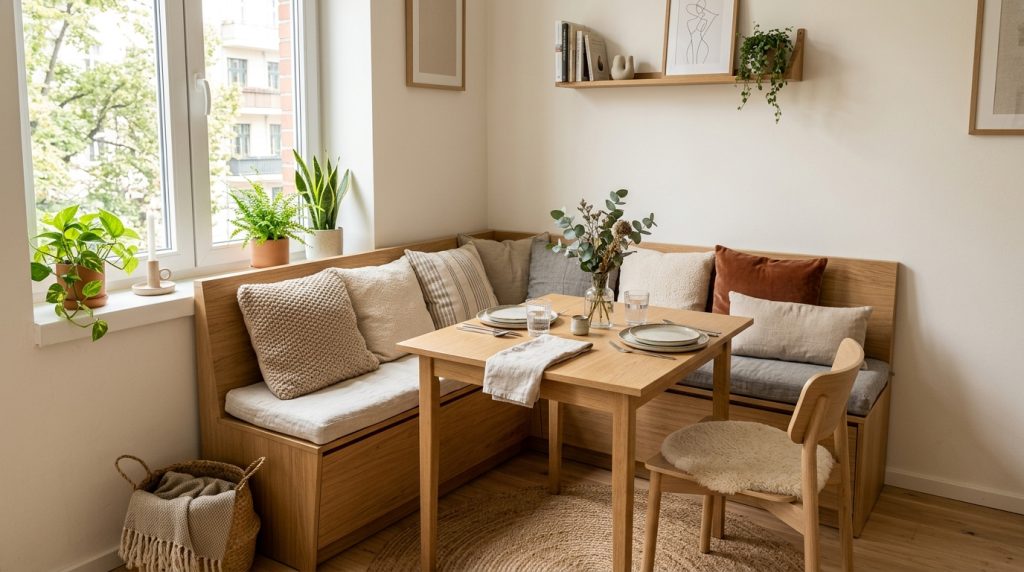
A corner dining setup utilizes unused space effectively by placing a table and seating arrangement in a room corner. This design improves space efficiency by reducing the area required for movement around the table. Pinterest ideas often feature L-shaped seating or compact benches to maximize seating capacity. This approach creates a defined dining zone without occupying the center of the room. It is suitable for small apartments where open space is limited. The corner placement allows better organization and improves flow within the room. Neutral colors and simple designs help maintain a clean and modern look. This concept supports both functionality and aesthetic improvement. It is a practical solution for creating a comfortable dining area in tight spaces. The arrangement can be customized based on available dimensions and seating needs.
The setup method begins with measuring the corner space to determine the appropriate table size. A compact table is placed against the wall, and seating is arranged along both sides. Benches or slim chairs are preferred to save space. Cushions can be added for comfort. The layout should allow easy access without blocking movement. Wall-mounted shelves or decor can enhance the visual appeal of the area. Maintenance involves keeping the area clean and organized. This step by step approach ensures efficient use of space. The process is simple and requires minimal tools. It is an easy project that delivers both functionality and improved organization.
Idea 3: Transparent Furniture Design
How to Create
Transparent furniture helps create the illusion of more space in a small dining area. This idea involves using clear materials such as acrylic or glass for tables and chairs. Pinterest ideas often highlight this approach for its ability to reduce visual clutter. The transparency allows light to pass through, making the area appear open and less crowded. This concept supports a modern design and minimalist style. It works well in compact spaces where bulky furniture can feel overwhelming. The design blends easily with different decor themes. It enhances the aesthetic without adding visual weight. This method is useful for maintaining a clean and organized environment. It is a simple yet effective way to improve the overall appearance of a small dining space.
The execution process involves selecting a transparent table and seating that fit the available space. Measurements should be taken to ensure proper placement. The furniture is arranged to allow smooth movement around the area. Cleaning is important to maintain clarity and prevent visible marks. Protective pads can be used to avoid scratches. This step by step method ensures a neat and polished look. The process requires minimal effort and no complex installation. It is a beginner friendly approach that delivers immediate visual improvement.
Idea 4: Wall-Mounted Shelving for Dining Storage
How to Create
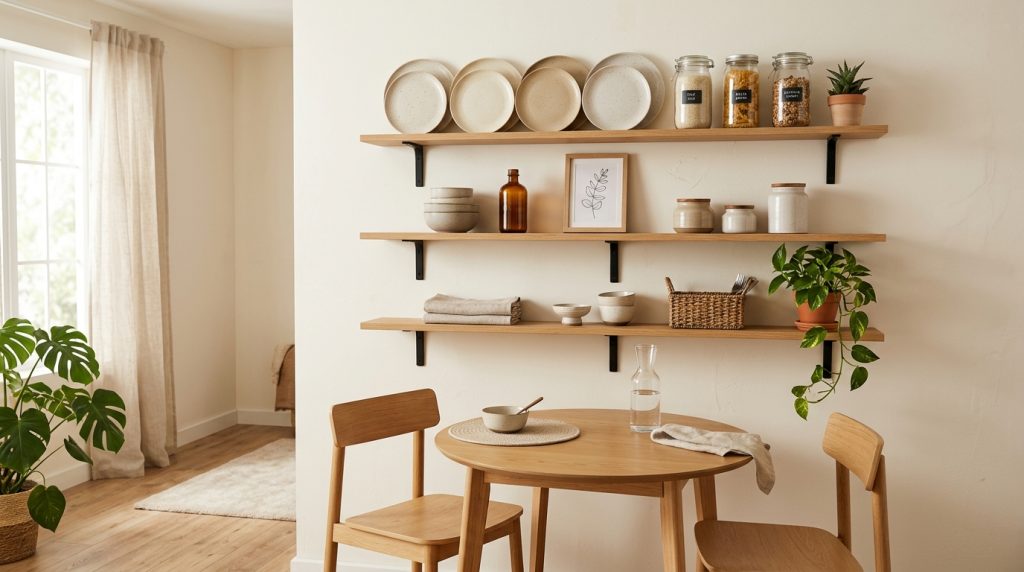
Wall-mounted shelving is an effective method for improving storage in a small dining area without using floor space. This idea focuses on utilizing vertical surfaces to hold dining essentials such as plates, glasses, and decorative items. Pinterest ideas often present open shelving as a combination of organization and decoration. It allows easy access to frequently used items while also displaying them in a structured way. This approach supports a minimalist style by reducing bulky cabinets and maintaining a clean layout. Shelves can be arranged in horizontal lines or staggered patterns depending on wall size. Neutral tones or natural finishes help maintain visual balance. This concept improves both functionality and aesthetic appeal by keeping the dining area organized. It is suitable for small apartments where storage space is limited. The design remains flexible and can be adjusted as needs change.
The setup method begins with measuring the wall area to determine shelf placement. A level is used to mark straight lines for alignment. Shelves are installed using brackets or adhesive supports, depending on weight requirements. Lightweight items should be placed evenly to maintain balance. Decorative elements such as small plants or jars can be added for visual interest. Regular cleaning keeps the shelves neat and functional. This step by step process ensures proper installation and efficient use of space. The project is beginner friendly and requires basic tools. It provides a practical solution for improving storage and maintaining an organized dining area.
Idea 5: Mirror-Enhanced Dining Space
How to Create
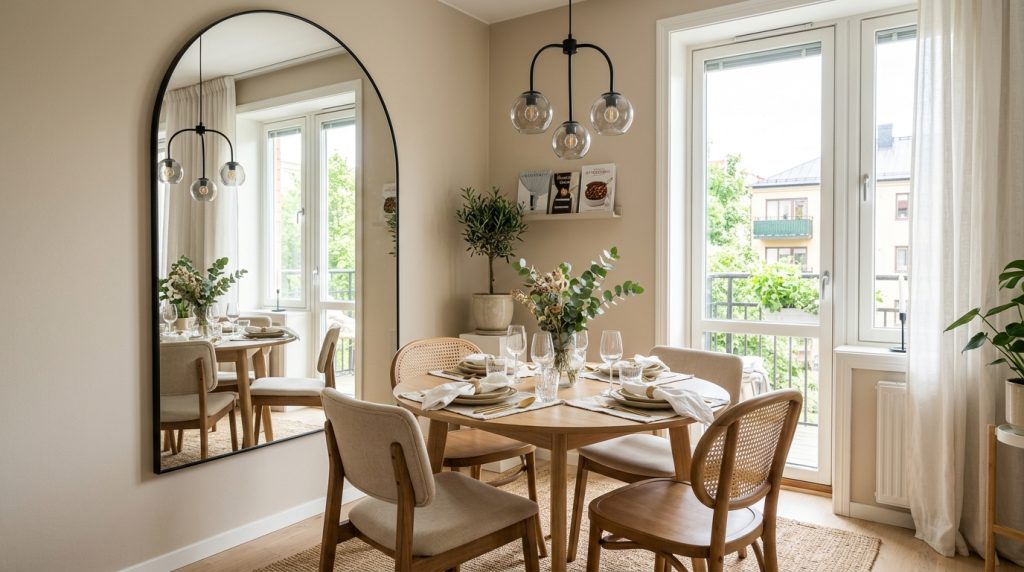
Mirrors are commonly used in small dining spaces to create the illusion of depth and increase brightness. This idea involves placing a mirror strategically to reflect light and expand the visual perception of the room. Pinterest ideas often feature large wall mirrors or grouped mirror panels to enhance aesthetic appeal. The reflective surface makes the area appear larger and more open. This concept supports modern design and works well with minimalist style interiors. Mirrors can also highlight decorative elements and improve overall lighting. The design is simple yet effective for improving spatial perception. It is a practical solution for compact dining areas where natural light may be limited. This approach enhances both functionality and visual comfort.
The execution process starts with selecting an appropriately sized mirror. The wall should be cleaned before installation to ensure proper adhesion. Adhesive hooks or mounting brackets are used to secure the mirror. Placement should focus on areas that reflect light sources or open spaces. Alignment should be checked to maintain symmetry. Maintenance involves regular cleaning to keep the surface clear. This step by step method ensures safe and effective installation. The process is simple and suitable for beginners. It provides immediate improvement in both lighting and visual space without requiring major changes.
Idea 6: Multi-Functional Dining Furniture
How to Create
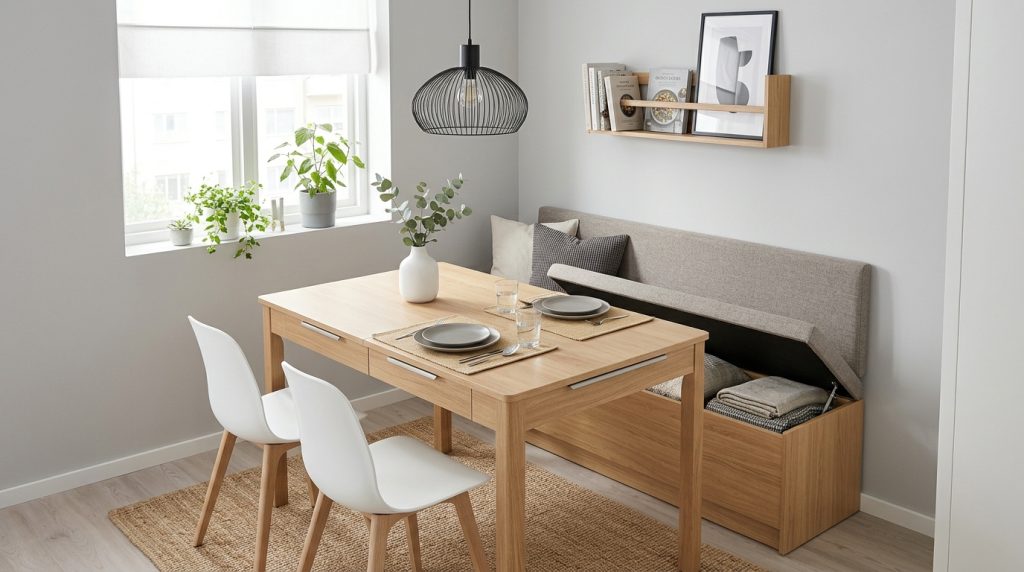
Multi-functional furniture is essential for maximizing usability in small dining areas. This idea focuses on selecting furniture that serves more than one purpose, such as tables with storage compartments or benches with hidden space. Pinterest ideas often highlight these solutions for their efficiency and practicality. This approach reduces the need for additional furniture, saving space and improving organization. It supports a modern design by combining functionality with clean aesthetics. The design is adaptable and works well in compact environments. It also helps maintain a clutter-free layout. This concept is suitable for individuals who need flexible and efficient solutions for small spaces. It enhances both convenience and visual appeal.
The setup method involves selecting furniture that fits the available space and meets storage needs. Measurements should be taken to ensure proper placement. Items are arranged to allow easy access and movement. Storage compartments should be organized to maximize efficiency. Regular maintenance involves cleaning and reorganizing items. This step by step process ensures effective use of space. The project is beginner friendly and requires minimal tools. It provides a practical and efficient solution for small dining areas.
Idea 7: Vertical Plant Decor
How to Create
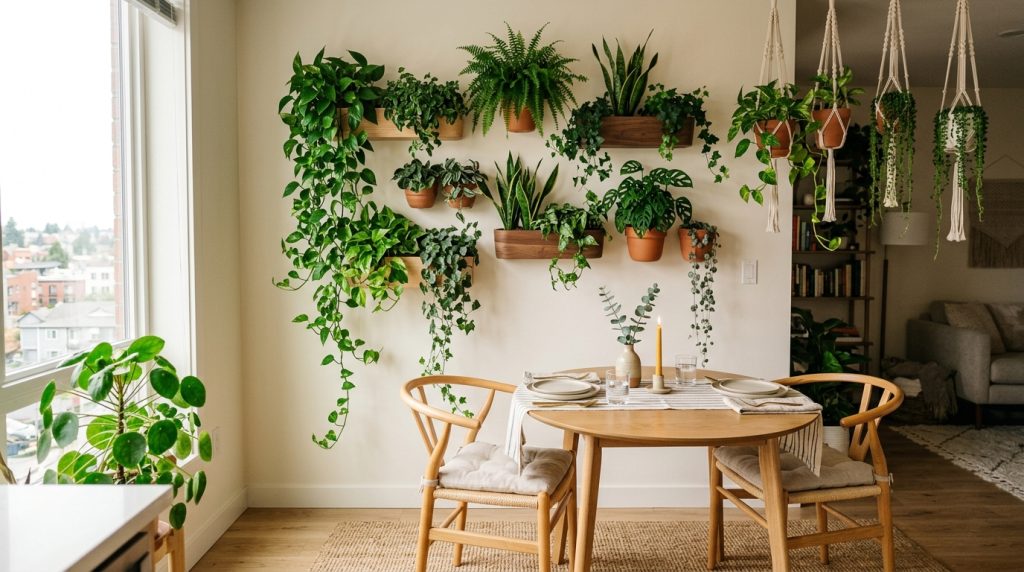
Vertical plant decor introduces natural elements into a small dining space without occupying floor area. This idea uses wall-mounted planters or hanging arrangements to display greenery. Pinterest ideas often feature vertical gardens as a way to enhance aesthetic appeal and improve air quality. The presence of plants adds texture and freshness to the environment. This concept supports both modern design and minimalist style. It creates a balanced and calming atmosphere. The design is flexible and can be adjusted based on available wall space. It is suitable for small apartments where floor space is limited. This approach combines decoration with functional benefits.
The setup process begins with selecting suitable plants and planters. The wall is measured to determine placement. Adhesive hooks or mounting supports are installed to hold the planters. Plants are arranged to create a balanced layout. Maintenance involves watering and occasional repositioning. This step by step method ensures proper installation and care. The process is simple and accessible for beginners. It provides a natural and visually appealing addition to the dining area.
Idea 8: Slim Profile Dining Furniture
How to Create
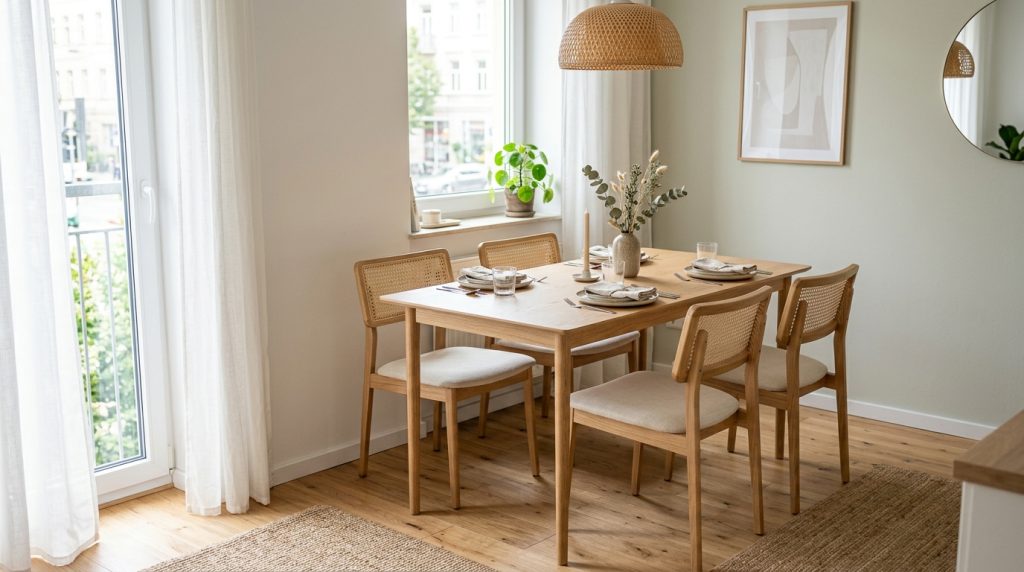
Slim profile furniture is designed to fit small spaces without compromising functionality. This idea involves using narrow tables and lightweight chairs that occupy minimal space. Pinterest ideas often highlight sleek designs that maintain a clean and modern appearance. This approach reduces visual clutter and improves movement within the dining area. It supports a minimalist style and efficient organization. The design is suitable for compact apartments where space is limited. It allows for comfortable dining without overcrowding the room. This concept enhances both usability and aesthetic balance.
The execution process starts with selecting furniture that matches the available dimensions. Measurements should be taken to ensure proper fit. Items are arranged to allow smooth movement. Lightweight materials make repositioning easier. Maintenance involves regular cleaning and adjustments. This step by step method ensures efficient use of space. The project is beginner friendly and requires minimal effort. It provides a practical solution for small dining areas.
Idea 9: Light Color Palette Design
How to Create
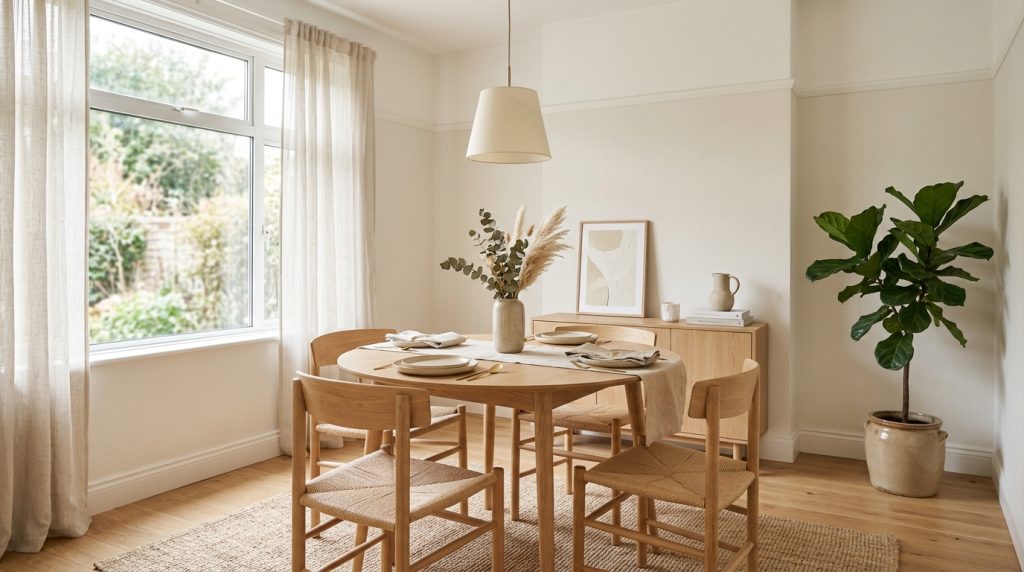
A light color palette helps create a sense of openness in small dining spaces. This idea focuses on using neutral tones such as white, beige, or soft gray for walls, furniture, and decor. Pinterest ideas often emphasize light colors to enhance brightness and visual space. This approach reflects natural light and reduces the feeling of confinement. It supports modern design and minimalist style. The design is simple and adaptable to different themes. It improves both aesthetic appeal and comfort. This concept is suitable for compact areas where darker colors may feel overwhelming.
The setup method involves selecting a consistent color scheme. Walls and furniture are chosen to match the palette. Decorative elements should complement the overall design. Lighting should be arranged to enhance brightness. Maintenance involves keeping surfaces clean and uncluttered. This step by step process ensures a cohesive and balanced look. The project is beginner friendly and easy to implement. It provides a simple way to improve the appearance of a small dining area.
Idea 10: Compact Lighting Arrangement
How to Create
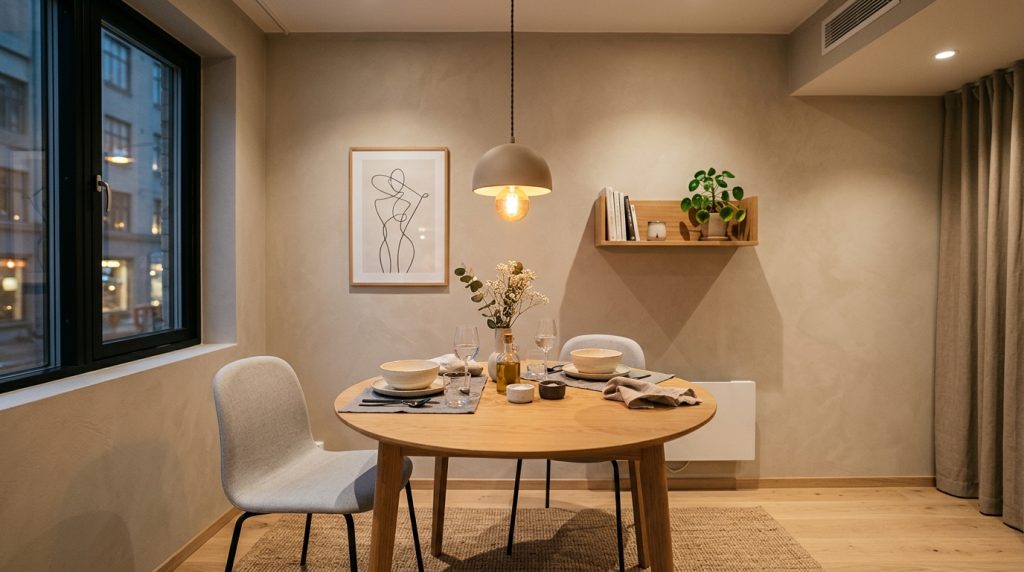
Compact lighting arrangements improve visibility and enhance the atmosphere of small dining spaces. This idea involves using space-saving lighting solutions such as pendant lights, wall lights, or small fixtures. Pinterest ideas often highlight layered lighting to create depth and focus. This approach ensures adequate illumination without occupying too much space. It supports modern design and improves functionality. The design can be adjusted based on room layout. It enhances both usability and aesthetic appeal. This concept is suitable for compact dining areas where lighting plays a key role in defining the space.
The setup process begins with selecting appropriate lighting fixtures. Placement should focus on the dining table and surrounding areas. Installation should ensure even distribution of light. Adjustable fixtures allow flexibility. Maintenance involves regular cleaning and checking connections. This step by step method ensures effective lighting setup. The project is beginner friendly and requires basic tools. It provides a practical way to improve both functionality and ambiance.
Common Beginner Mistakes and How to Avoid Them
A common mistake in small dining room decor is overcrowding the space with large furniture. This reduces movement and makes the area feel confined. Selecting appropriately sized items prevents this issue. Another mistake is ignoring vertical space, which limits storage options. Using wall-mounted solutions improves organization. Poor lighting choices can also affect functionality and visibility. Ensuring proper lighting placement enhances usability. Inconsistent color schemes create visual imbalance. Maintaining a cohesive palette improves overall appearance. Lack of planning leads to inefficient layouts and wasted space. Measuring and planning in advance ensures better results. Avoiding these mistakes helps create a well-organized and functional dining area.
Practical Tips for Better Results
Using multi-purpose furniture improves efficiency in small spaces. Selecting lightweight and movable items allows easy adjustments. Measuring spaces accurately ensures proper placement. Maintaining a consistent design theme supports visual balance. Regular cleaning and organization keep the area functional. Using mirrors and light colors enhances brightness. Keeping decor minimal prevents clutter. These practical tips improve both usability and aesthetic appeal. They help achieve better results with minimal effort.
Styling, Presentation, or Organization Ideas
Styling a small dining area requires careful arrangement of elements. Grouping similar items creates a cohesive look. Using vertical storage improves organization. Layering textures adds depth without overcrowding. Balanced color schemes enhance visual harmony. Decorative elements should be minimal and purposeful. Lighting can highlight key areas. Maintaining clean lines supports a modern design. Organized layouts improve usability and comfort. These strategies ensure a well-presented and functional dining space.
Budget or Time Planning
Budget planning helps control expenses when decorating a small dining area. Prioritizing essential items ensures efficient spending. Choosing multi-purpose furniture reduces overall cost. Time planning involves completing tasks in stages. Preparing materials in advance saves time. Simple DIY projects can be completed quickly. Tracking progress ensures consistency. Combining budget and time planning improves efficiency. This approach supports successful project completion.
Creative Expansion and Advanced Inspiration
Creative expansion involves combining multiple ideas to enhance small dining spaces. Mixing textures and materials creates a dynamic design. Adding layered lighting improves depth and ambiance. Modular furniture allows flexible arrangements. Experimenting with patterns adds visual interest. Expanding ideas gradually prevents clutter. These approaches encourage creativity while maintaining practicality. They help create a personalized and adaptable dining area.