
10 Bedroom Inspirations Master Ideas
Introduction
Bedroom design plays a central role in shaping daily comfort, rest quality, and overall home organization. A well-planned bedroom combines function with visual clarity, ensuring that every element serves a purpose while maintaining a cohesive look. This article explores practical and structured Pinterest ideas focused on bedroom inspiration, with a strong emphasis on realistic implementation. Readers will learn how to transform a standard bedroom into a well-organized and visually balanced space using simple materials and clear planning. Each idea focuses on achievable steps, making it suitable for beginners who want to start a DIY creative project without complex tools or advanced skills. The concepts presented here cover layout adjustments, storage solutions, lighting strategies, and decorative enhancements that align with modern design and minimalist style. These approaches also support budget ideas by using accessible materials and efficient planning methods. The goal is to provide clear, actionable guidance that helps readers create a functional and aesthetic bedroom environment that supports relaxation and organization while maintaining consistency with trending ideas in home decor.
Why This Idea Is Trending or Useful
Bedroom inspiration has become a major focus in Pinterest ideas due to increased interest in personal space improvement and functional home decor. Modern lifestyles require bedrooms to serve multiple purposes, including rest, storage, and sometimes workspace integration. This shift has increased demand for creative ideas that combine comfort with organization. The appeal of these ideas lies in their accessibility, as many designs rely on simple materials and beginner friendly methods. DIY approaches allow individuals to customize their space according to personal needs while maintaining cost control. Additionally, minimalist style and modern design principles are widely adopted because they reduce visual clutter and improve usability. These trending ideas also emphasize efficient use of space, which is essential in both small and large rooms. The ability to follow a step by step tutorial makes these projects practical for individuals without prior experience. As a result, bedroom inspiration content continues to grow in popularity because it provides clear value through improved comfort, better organization, and achievable aesthetic upgrades that align with current home decor trends.
Materials and Preparation
Effective bedroom transformation begins with proper planning and material selection. Basic materials include wood panels, fabric, paint, storage boxes, lighting fixtures, and decorative accessories. Tools such as measuring tape, screwdriver, drill, adhesive hooks, and level tools are essential for accurate installation and alignment. Preparation starts with evaluating the available space, identifying storage needs, and determining the primary function of the room. Planning includes sketching a layout that considers furniture placement, walking space, and lighting sources. Cleaning and decluttering the area is a critical first step to ensure a clear working environment. Measurements should be taken carefully to avoid material waste and ensure proper fit. Choosing a consistent color palette supports a cohesive aesthetic and simplifies decision-making. Budget planning helps prioritize essential elements before decorative additions. It is also important to consider ventilation and natural light when planning layout changes. Proper preparation ensures that each DIY project progresses smoothly, reduces errors, and allows for efficient use of time and materials while achieving a well-structured and visually balanced bedroom design.
Idea 1: Minimalist Neutral Bedroom Setup
How to Create
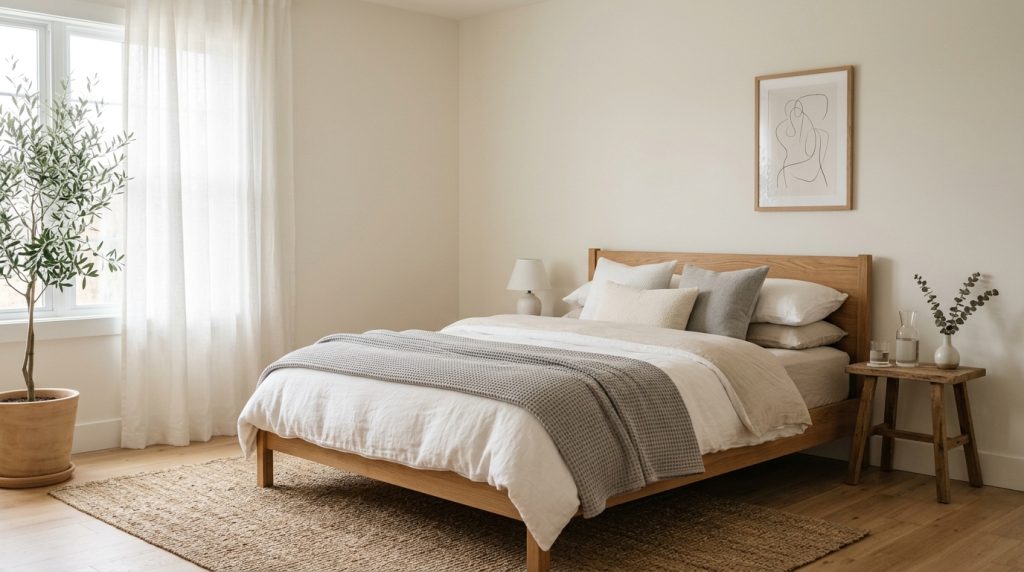
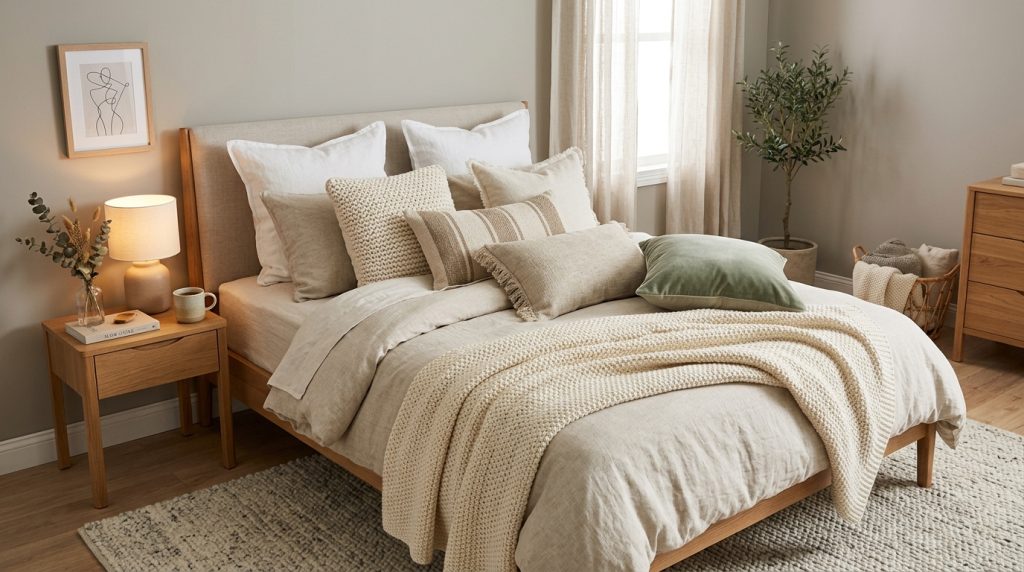
A minimalist neutral bedroom focuses on simplicity, functionality, and visual balance. This concept uses a limited color palette, typically including white, beige, and soft gray tones, to create a calm environment. The design reduces unnecessary decoration and prioritizes essential furniture such as a bed, side table, and storage unit. Clean lines and uncluttered surfaces are key elements of this style. Soft textures like cotton bedding and light curtains add comfort without disrupting the minimalist aesthetic. Lighting plays an important role, with natural light being maximized and artificial lighting kept soft and evenly distributed. This approach aligns with modern design principles by focusing on clarity and space efficiency. It is a beginner friendly concept because it requires fewer materials and simplifies decision-making. The result is a bedroom that supports relaxation while maintaining a structured and organized appearance.
To create this setup, start by clearing the room and removing excess items. Choose a neutral wall color and apply paint evenly. Select simple furniture with clean lines and avoid bulky designs. Arrange the bed centrally to maintain balance and ensure enough walking space around it. Add soft bedding in neutral tones and limit decorative elements to one or two items such as a framed artwork or small plant. Use storage boxes or under-bed organizers to keep items hidden and maintain a clutter-free environment. Install soft lighting such as wall-mounted lamps or warm LED bulbs. Ensure all elements align with the chosen color palette. This step by step approach helps maintain consistency and creates a visually calm and functional bedroom space.
Idea 2: Floating Shelf Storage Design
Step-by-Step Guide
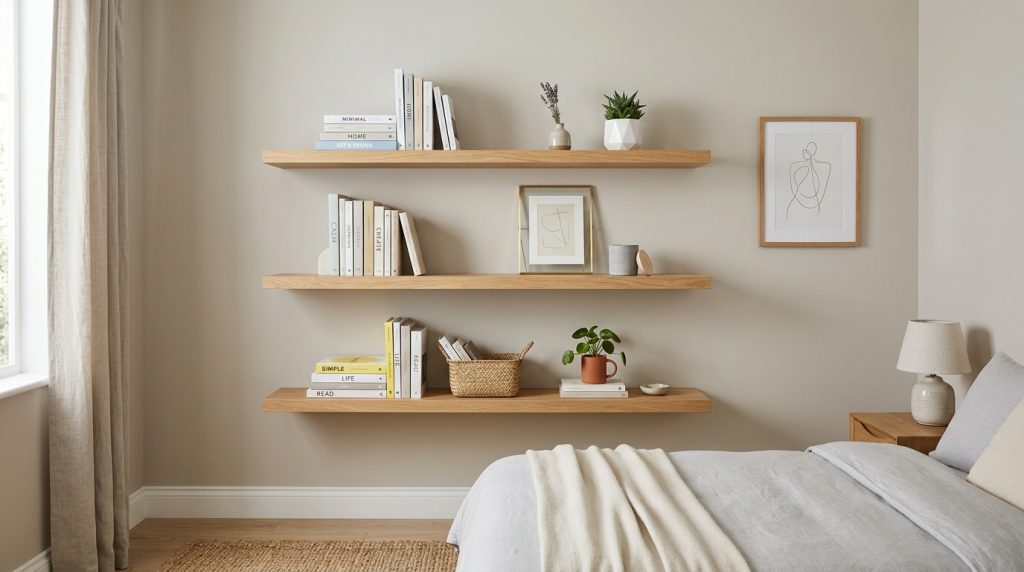
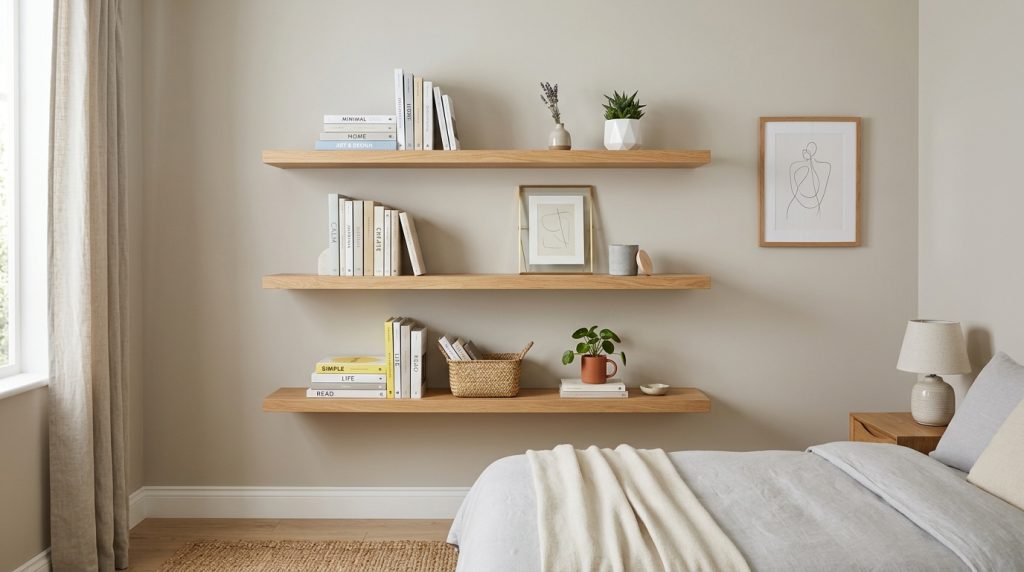
Floating shelves provide an efficient storage solution while enhancing vertical space usage. This idea focuses on organization without occupying floor space, making it ideal for smaller bedrooms. Shelves can hold books, decorative items, or daily essentials, reducing clutter on surfaces like bedside tables. The design contributes to a clean and modern aesthetic, especially when arranged symmetrically. Materials such as wood or engineered boards are commonly used due to their durability and ease of installation. The shelves should be aligned evenly to maintain visual balance. This concept supports DIY projects because it requires basic tools and simple measurements. It also allows flexibility in placement, enabling customization based on room layout. The result is a structured and accessible storage system that integrates seamlessly into the bedroom design.
To implement this idea, begin by measuring the wall area where shelves will be installed. Mark positions using a level tool to ensure straight alignment. Drill holes and install wall anchors for support. Attach brackets securely before placing the shelves on top. Choose materials that match the room’s color palette to maintain consistency. Arrange items on the shelves in a balanced way, avoiding overcrowding. Use a mix of functional and decorative objects to create visual interest while maintaining organization. Ensure weight distribution is even to prevent damage. This setup method provides a practical solution for maximizing storage while maintaining a minimalist and organized bedroom environment.
Idea 3: Layered Lighting Bedroom Concept
How to Make
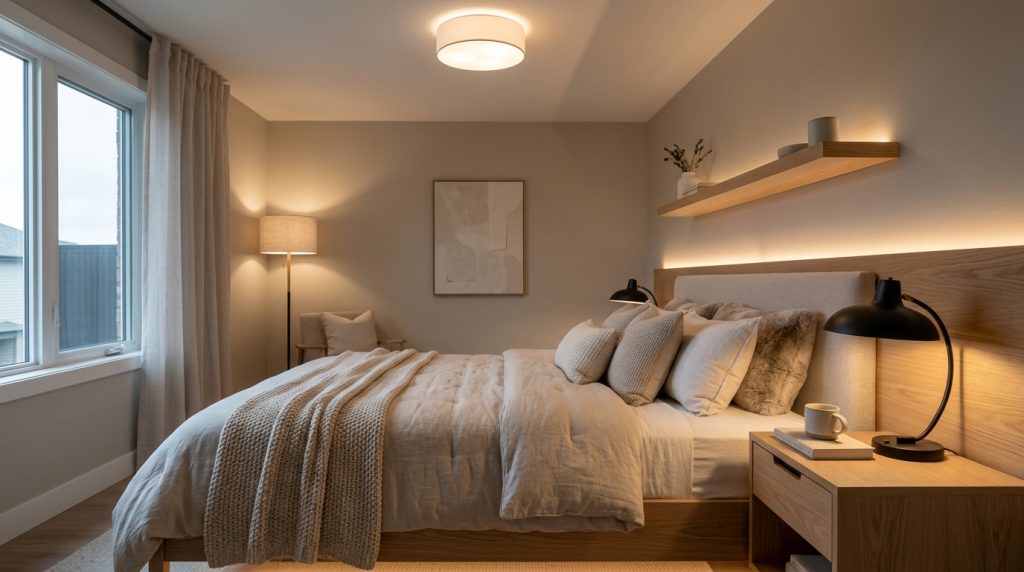
Layered lighting enhances both functionality and atmosphere in a bedroom. This concept combines multiple light sources, including ambient, task, and accent lighting, to create a balanced environment. Ambient lighting provides overall illumination, while task lighting supports activities such as reading. Accent lighting highlights specific areas or decorative elements. This approach improves usability and adds depth to the room’s design. It aligns with modern design trends by emphasizing flexibility and efficiency. Proper lighting placement ensures even distribution and reduces shadows. This idea is practical because it does not require structural changes and can be implemented with basic fixtures. It also supports aesthetic goals by creating a warm and inviting atmosphere.
To create layered lighting, start by installing a central ceiling light for general illumination. Add bedside lamps or wall-mounted lights for reading purposes. Include LED strips or small spotlights to highlight shelves or artwork. Choose warm light tones to maintain a relaxing environment. Position lights strategically to avoid glare and ensure even coverage. Use switches or dimmers to control brightness levels. Select fixtures that complement the room’s style to maintain consistency. This step by step tutorial ensures that lighting serves both functional and decorative purposes, resulting in a well-balanced and comfortable bedroom space.
Idea 4: Under-Bed Storage Optimization
Execution Process
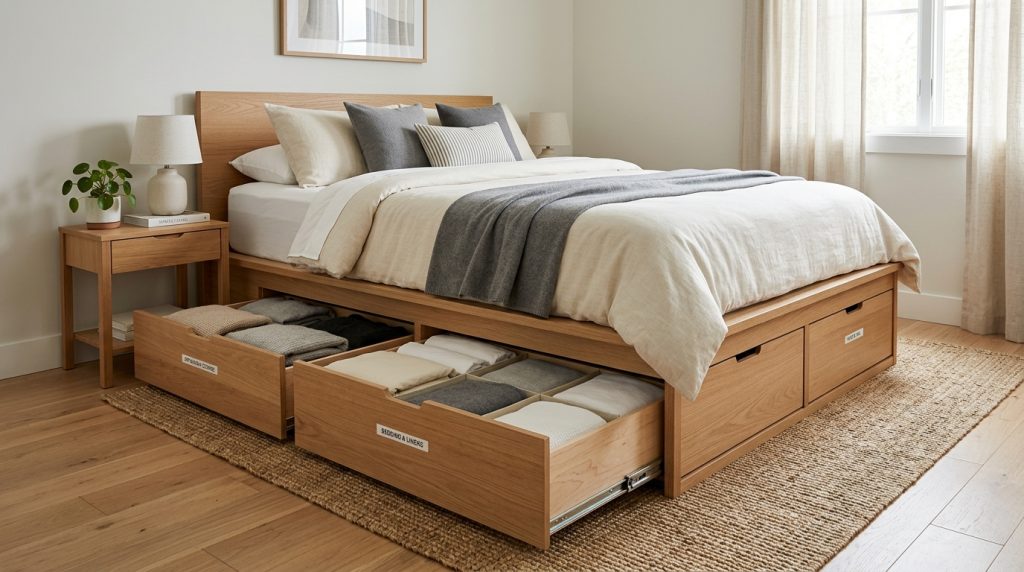
Under-bed storage optimization focuses on using hidden space efficiently to improve bedroom organization without affecting visual aesthetics. This idea is particularly useful in rooms with limited storage options, where maximizing every available area becomes essential. The space beneath the bed can store seasonal clothing, extra bedding, or rarely used items. This method supports a minimalist style by reducing visible clutter and maintaining clean surfaces. Storage containers used in this setup are typically low-profile to fit easily under standard bed frames. Materials such as plastic bins, wooden drawers, or fabric organizers are commonly used due to their accessibility and practicality. This concept aligns with modern design by combining function with simplicity. It is a beginner friendly DIY project that does not require structural changes, making it suitable for quick implementation. Proper organization within this space also improves accessibility and reduces time spent searching for stored items.
To implement this setup, start by measuring the clearance height under the bed. Choose storage containers that fit within this space while allowing easy movement. Sort items into categories such as clothing, bedding, or accessories before placing them into labeled containers. Use containers with lids to protect items from dust. Slide the containers neatly under the bed, ensuring they are evenly arranged for easy access. If the bed frame allows, consider installing rolling drawers for smoother operation. Maintain a consistent organization system by returning items to their designated containers after use. This step by step process ensures efficient use of space while maintaining a clean and structured bedroom layout.
Idea 5: Accent Wall Panel Design
How to Create
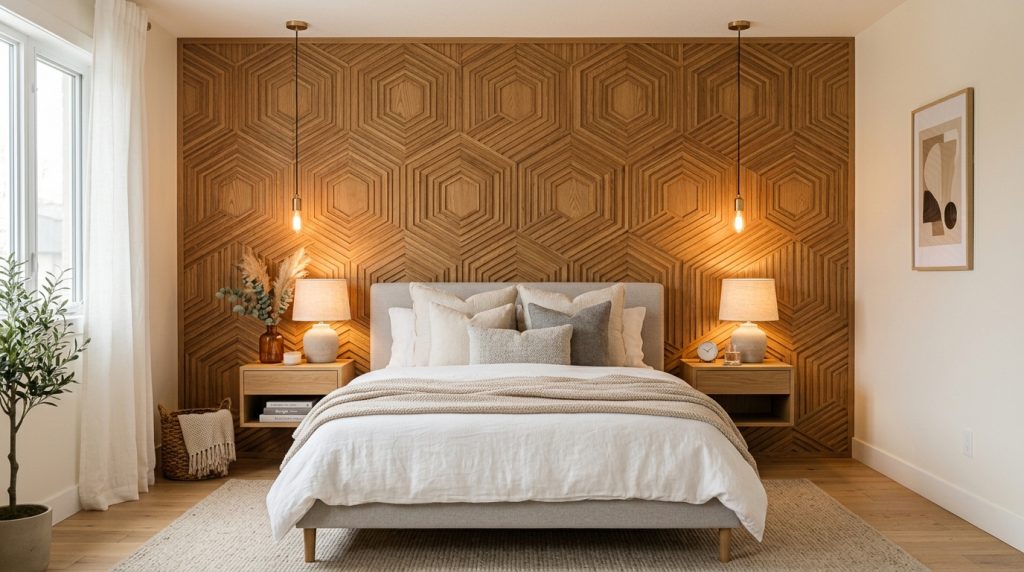
An accent wall panel design introduces visual depth and structure to a bedroom by focusing on one feature wall. This concept uses materials such as wood panels, geometric patterns, or textured surfaces to create contrast without overwhelming the space. The purpose of an accent wall is to define a focal point, usually behind the bed, which enhances the overall aesthetic of the room. This idea aligns with trending Pinterest ideas by combining creativity with controlled design. It allows personalization while maintaining a cohesive look. The use of neutral or muted tones ensures compatibility with various decor styles. This approach supports modern design principles by emphasizing balance and simplicity. It is a practical DIY project that can be completed with basic tools and careful planning. The result is a structured and visually engaging bedroom environment.
To create an accent wall, begin by selecting the wall that will serve as the focal point. Measure the surface area and plan the panel layout in advance. Cut the panels according to measurements and prepare the wall by cleaning and smoothing the surface. Attach the panels using adhesive or nails, ensuring proper alignment throughout the installation. Apply paint or finish to achieve the desired look, maintaining consistency with the room’s color palette. Allow sufficient drying time before arranging furniture. Position the bed against the accent wall to highlight the design. This execution process ensures a clean and professional finish while enhancing the overall bedroom aesthetic.
Idea 6: Multi-Functional Furniture Layout
Setup Method
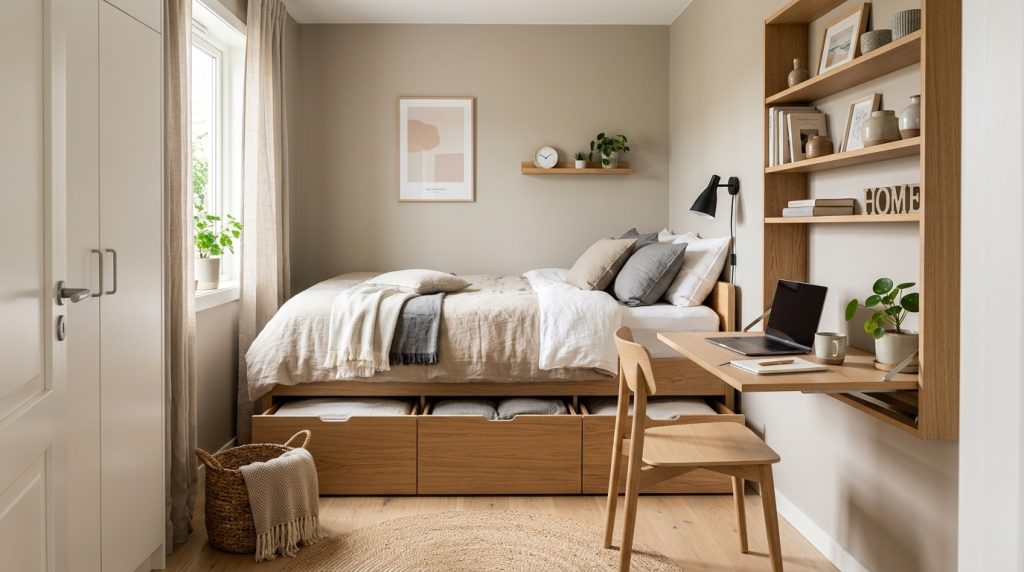
A multi-functional furniture layout focuses on maximizing utility by using furniture that serves more than one purpose. This concept is essential in modern home decor where space efficiency is a priority. Examples include beds with built-in storage, foldable desks, or benches with hidden compartments. This approach reduces the need for additional furniture, helping maintain a clutter-free environment. It supports organization by integrating storage directly into essential items. The design also aligns with minimalist style by limiting the number of visible elements in the room. This idea is practical and beginner friendly because it relies on selecting appropriate furniture rather than complex construction. It is particularly useful for small bedrooms where space management is critical. The result is a highly functional and organized living space that meets multiple needs without compromising aesthetics.
To set up a multi-functional layout, start by identifying the primary needs of the room, such as sleeping, storage, and workspace. Choose furniture that combines these functions efficiently. Position larger items like the bed first, ensuring there is enough movement space. Place multi-purpose furniture in accessible locations to maximize usability. For example, position a storage bench at the foot of the bed or a foldable desk near a light source. Keep pathways clear to maintain comfort and accessibility. Organize stored items within compartments to prevent clutter buildup. This step by step setup ensures efficient use of space while maintaining a balanced and practical bedroom design.
Idea 7: Soft Textile Layering Approach
How to Make
Soft textile layering enhances comfort and visual depth in a bedroom by combining different fabric elements. This idea includes the use of bedding, throws, cushions, and curtains to create a cohesive and inviting environment. Layering involves combining textures such as cotton, linen, and wool to add dimension without cluttering the space. The color palette should remain consistent to maintain visual harmony. This concept aligns with aesthetic and modern design trends by focusing on comfort and subtle detail. It is a simple DIY project that does not require tools, making it accessible for beginners. The approach improves both functionality and decoration by enhancing warmth and comfort. It also allows easy updates by changing textiles according to seasons or preferences.
To create this layered look, start with a base layer such as a neutral bed sheet. Add a duvet or comforter in a complementary tone. Place cushions of varying sizes and textures on the bed, ensuring balanced arrangement. Add a throw blanket at the foot of the bed for additional texture. Choose curtains that match the overall color scheme and allow natural light to filter through. Ensure that all textile elements work together without creating visual overload. Regularly maintain and clean fabrics to preserve their appearance. This step by step method ensures a cohesive and comfortable bedroom setup.
Idea 8: Wall Art Grid Arrangement
Step-by-Step Guide
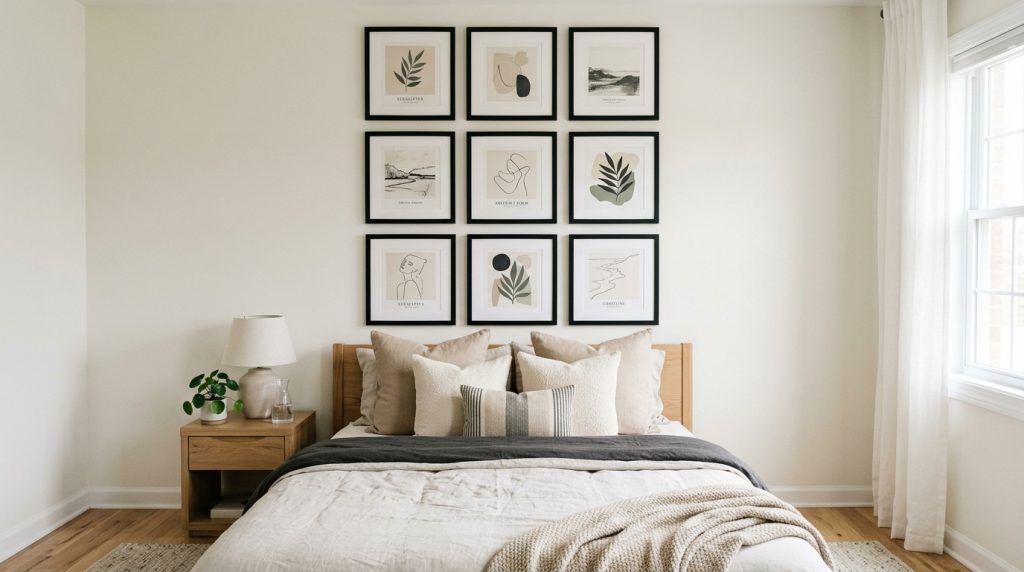
A wall art grid arrangement creates a structured and visually balanced display by organizing multiple frames in a consistent pattern. This idea enhances bedroom decoration while maintaining order and symmetry. The grid layout ensures that each piece aligns properly, creating a cohesive visual effect. Materials typically include frames, printed artwork, and mounting tools. This concept supports modern design by emphasizing clean lines and organized presentation. It is a beginner friendly project that requires careful measurement and alignment rather than complex techniques. The arrangement can include photographs, illustrations, or abstract designs, depending on personal preference. This method transforms empty wall space into a focal point while maintaining a minimalist aesthetic.
To set up a wall art grid, start by selecting frames of the same size for uniformity. Plan the layout on the floor before installation to determine spacing and alignment. Measure the wall and mark positions using a level tool to ensure straight placement. Install hooks or nails securely before hanging the frames. Maintain equal spacing between each frame to achieve a clean grid pattern. Step back and adjust alignment if necessary. Choose artwork that follows a consistent color theme to maintain harmony. This step by step tutorial ensures a precise and visually appealing arrangement that enhances the bedroom’s overall design.
Idea 9: Indoor Plant Corner Setup
How to Create
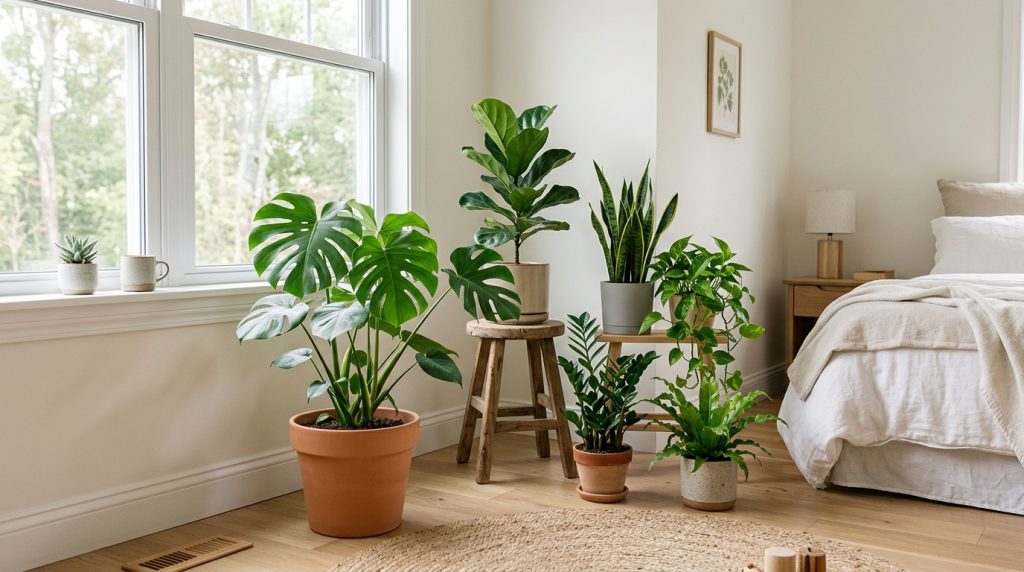
An indoor plant corner introduces natural elements into the bedroom, improving air quality and adding visual freshness. This idea focuses on grouping plants in a dedicated area to create a balanced and organized look. Plants of varying heights and leaf shapes add dimension while maintaining a cohesive arrangement. Containers should be simple and consistent with the room’s overall design. This concept aligns with trending ideas in home decor by integrating natural elements into indoor spaces. It is a beginner friendly project that requires minimal tools and basic maintenance. Proper placement near natural light sources ensures healthy plant growth. The result is a refreshing and calming bedroom environment.
To create a plant corner, start by selecting a suitable location with adequate light. Choose plants that require similar care to simplify maintenance. Arrange them on stands or shelves to create variation in height. Use trays or mats to protect the floor from water spills. Ensure proper drainage in each pot to prevent overwatering. Water plants according to their needs and monitor their condition regularly. Keep the arrangement clean and remove dead leaves to maintain appearance. This setup method ensures a structured and low-maintenance plant display that enhances the bedroom’s aesthetic.
Idea 10: Minimal Bedside Organization System
How to Make
A minimal bedside organization system focuses on keeping essential items within reach while maintaining a clean and uncluttered surface. This idea includes using small trays, organizers, or compact storage units to manage items such as books, lamps, and personal accessories. The goal is to reduce visual clutter and improve accessibility. This concept aligns with minimalist style and modern design principles by emphasizing simplicity and functionality. It is a practical DIY project that requires minimal materials and planning. The system ensures that frequently used items are organized efficiently without overcrowding the space. This approach also supports better daily routines by keeping essentials easily accessible.
To create this system, start by clearing the bedside surface and identifying essential items. Choose a small organizer or tray to group these items together. Position a lamp for functional lighting without occupying excessive space. Use drawers or small containers to store additional items out of sight. Maintain a consistent arrangement by returning items to their designated positions after use. Avoid adding unnecessary objects to preserve the minimalist approach. Clean the surface regularly to maintain organization. This step by step process ensures a practical and visually clean bedside setup that enhances overall bedroom functionality.
Common Beginner Mistakes and How to Avoid Them
One common mistake in bedroom DIY projects is poor planning before starting the work. Skipping measurements often leads to mismatched furniture placement or wasted materials. Another issue is overcrowding the space with too many decorative elements, which reduces functionality and creates visual clutter. Many beginners also ignore lighting balance, resulting in uneven illumination that affects usability. Choosing inconsistent color schemes can disrupt the overall aesthetic and make the room appear uncoordinated. Improper storage solutions often lead to disorganization over time. To avoid these issues, always begin with clear planning and accurate measurements. Limit decorative items to essential pieces that complement the design. Maintain a consistent color palette and ensure proper lighting distribution. Use practical storage systems that match the room’s needs. Regularly review and adjust the setup to maintain organization and functionality.
Practical Tips for Better Results
Achieving effective bedroom transformation requires attention to detail and consistent execution. Start by prioritizing functionality before decoration to ensure the space meets daily needs. Use a limited color palette to maintain visual harmony and simplify decision-making. Select materials that are durable and easy to maintain for long-term use. Keep pathways clear to improve movement within the room. Regularly declutter surfaces to prevent accumulation of unnecessary items. Use vertical space for storage to maximize efficiency. Test lighting placement before final installation to ensure proper coverage. Maintain a balance between open space and filled areas to avoid overcrowding. These practical steps improve both the appearance and usability of the bedroom while ensuring a structured and well-organized result.
Styling, Presentation, or Organization Ideas
Styling a bedroom effectively involves arranging elements in a way that enhances both function and visual appeal. Start by focusing on symmetry, especially around the bed area, to create balance. Use layered textiles to add depth while maintaining a consistent color theme. Arrange decorative items in groups rather than spreading them randomly to maintain order. Incorporate natural elements such as plants to introduce variation. Use storage solutions that blend with the design to keep items hidden. Maintain clean surfaces to emphasize a minimalist aesthetic. Ensure that lighting complements the overall style by using fixtures that match the room’s theme. This approach creates a cohesive and visually structured bedroom environment that aligns with modern home decor trends.
Budget or Time Planning
Efficient planning helps complete bedroom projects within a reasonable budget and timeframe. Start by identifying essential changes and prioritize them before adding decorative elements. Allocate a budget for materials such as paint, storage units, and lighting fixtures. Reuse existing furniture when possible to reduce costs. Break the project into smaller tasks to manage time effectively. Schedule each step to avoid delays and maintain progress. Purchase materials in advance to prevent interruptions. Focus on simple DIY solutions that do not require specialized tools. Monitor expenses regularly to stay within budget. This structured approach ensures that the project remains manageable while achieving the desired results.
Creative Expansion and Advanced Inspiration
Once the basic bedroom setup is complete, additional enhancements can be introduced to expand the design. Consider integrating smart lighting systems for adjustable brightness and improved control. Add custom-built storage solutions to maximize space efficiency. Experiment with textured wall finishes to create subtle visual variation. Introduce modular furniture for flexible arrangements. Use advanced organization systems such as labeled compartments or hidden storage panels. Combine different design elements carefully to maintain consistency. Explore new layout configurations to improve functionality. These advanced ideas allow continuous improvement of the bedroom while maintaining alignment with modern design and organization principles.