
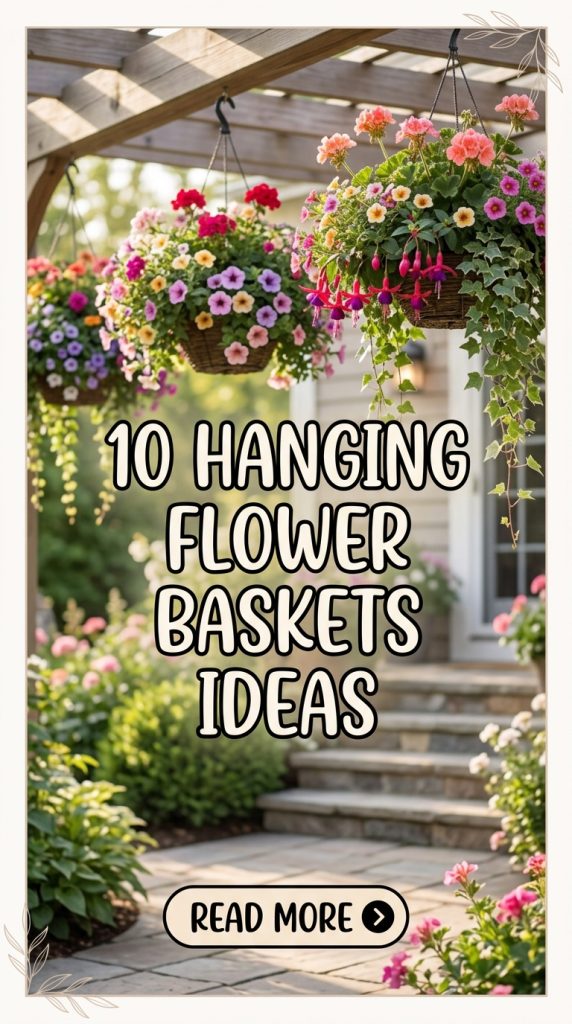
10 Hanging Flower Baskets Ideas
Introduction
Hanging flower baskets are a practical and visually structured way to enhance vertical space in both indoor and outdoor settings. These arrangements are widely featured in Pinterest ideas because they combine decoration with efficient space use. A hanging system allows plants to receive balanced light exposure while freeing up ground-level surfaces. This method is suitable for small balconies, patios, entryways, and even interior corners. Readers will learn how to create different hanging basket styles using simple materials, clear planning, and step-by-step processes. Each idea focuses on a distinct design approach, ensuring variation in structure, plant selection, and placement. The goal is to provide a detailed DIY tutorial framework that supports beginner-friendly execution without requiring advanced gardening skills. Hanging baskets also support better plant health through improved air circulation and drainage control. These creative ideas are useful for home decor, organization of plant displays, and creating aesthetic focal points. With proper planning, these projects can be completed as budget ideas while maintaining a clean and modern design suitable for everyday living environments.
Why This Idea Is Trending or Useful
Hanging flower baskets are trending ideas on Pinterest because they align with modern design preferences that prioritize space efficiency and visual layering. Vertical gardening methods are especially useful in compact homes where floor space is limited. These baskets provide a structured way to introduce greenery without overcrowding surfaces. The DIY aspect increases accessibility, allowing beginners to create personalized decoration pieces using basic materials. This method also supports organization by keeping plants contained and easy to manage. The aesthetic appeal comes from the ability to mix colors, textures, and plant types in a controlled arrangement. Hanging systems are adaptable for both indoor and outdoor environments, making them suitable for various climates and home layouts. Another reason for their popularity is the flexibility in styling, from minimalist style arrangements to more detailed decorative designs. The step-by-step creation process makes these projects approachable, even for those with limited experience. Overall, these baskets combine functionality, creative expression, and practical use, making them a reliable choice for anyone seeking easy project ideas that enhance home decor.
Materials and Preparation
Creating hanging flower baskets requires a clear understanding of materials, tools, and preparation steps. Common materials include baskets or containers, sturdy rope or chain, hooks, potting soil, and selected plants. Containers should have proper drainage holes to prevent water accumulation. Tools such as scissors, gloves, and small gardening trowels are necessary for handling soil and plants efficiently. Preparation begins with selecting the right location based on light exposure and weight support. Planning includes choosing plant types that thrive in similar conditions, such as sunlight levels and watering frequency. Soil selection is also important, as lightweight potting mixes are more suitable for hanging structures. Before assembling, ensure that hooks or support systems are securely installed to hold the weight of the basket when fully watered. Measuring rope length and balancing the basket evenly prevents tilting. Pre-arranging plants before final placement helps achieve a balanced aesthetic. Proper planning ensures that the final result is stable, functional, and visually consistent with the intended design. This preparation stage is essential for achieving long-lasting results in any DIY hanging basket project.
Idea 1: Classic Woven Basket Arrangement
How to Create
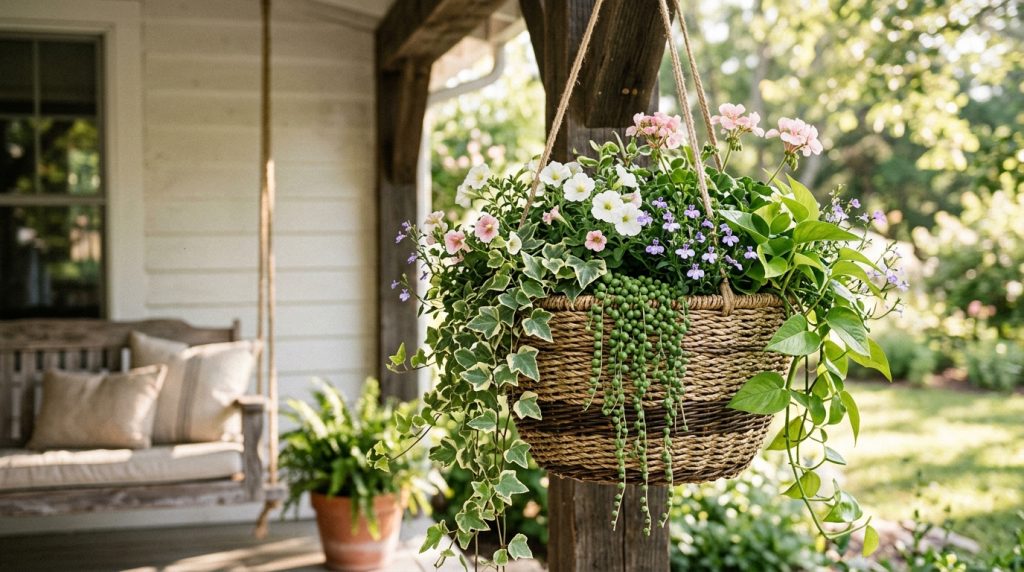
A classic woven basket arrangement focuses on using natural materials to achieve a balanced and structured look. This idea uses a traditional basket made from materials such as rattan or wicker. These baskets allow airflow through their structure, which helps maintain healthy plant conditions. The design works well in both rustic and modern environments due to its neutral appearance. Plants with trailing growth patterns are commonly used to create a cascading effect, which enhances the vertical dimension. The arrangement should include a central plant for height and surrounding plants for fullness. This layered composition creates a visually complete display. The simplicity of this design makes it suitable for beginners while still delivering a refined aesthetic. The basket’s natural texture adds depth without requiring additional decoration. This idea aligns with minimalist style principles by focusing on form and balance rather than excessive detail. Proper placement near windows or outdoor hooks ensures adequate light exposure. This approach is widely used in Pinterest ideas due to its adaptability and clean structure.
The execution process begins by lining the woven basket with a protective layer such as coco fiber or fabric to hold soil securely. Add a lightweight potting mix to reduce overall weight. Insert the central plant first, ensuring it is firmly placed. Surround it with smaller plants, spacing them evenly for balanced growth. Water the soil lightly before hanging to settle the arrangement. Attach ropes or chains evenly at three or four points to maintain stability. Secure the basket onto a strong hook or bracket. Regular maintenance includes watering based on plant needs and trimming excess growth to maintain shape. This step-by-step method ensures the basket remains functional and visually consistent. The materials used are simple and accessible, making this an easy project for beginners. With proper care, the arrangement will continue to grow evenly, maintaining its structure and aesthetic over time.
Idea 2: Minimalist Metal Frame Basket
Step-by-Step Guide
A minimalist metal frame basket uses a structured frame to create a clean and modern design. This type of basket typically features a geometric shape, such as circular or rectangular forms. The open-frame design reduces visual clutter and highlights the plants themselves. This approach is commonly used in contemporary home decor where simplicity and precision are emphasized. The design works well with monochromatic plant arrangements or limited color palettes. Plants with compact growth patterns are ideal for maintaining a neat appearance. The metal frame also provides durability and long-term use. This idea is suitable for indoor settings where controlled lighting enhances the visual effect. The simplicity of the frame allows it to blend with various interior styles without dominating the space. This concept aligns with trending Pinterest ideas that focus on modern design and functional decoration. The structured appearance makes it easy to maintain organization while still achieving an aesthetic outcome.
To create this basket, start by selecting a metal frame with a stable base. Insert a fitted liner to hold soil securely. Add a lightweight potting mix to prevent excessive weight. Choose plants that grow evenly and do not require excessive space. Arrange the plants carefully, ensuring they are centered and balanced. Attach strong chains or wires to the frame’s designated points. Install a ceiling hook or wall bracket that can support the weight. Hang the basket at a height that allows easy maintenance. Water the plants carefully to avoid overflow, as the open design requires controlled watering. Regular trimming ensures the plants maintain their shape. This setup method provides a clear, step-by-step process that is easy to follow. The result is a clean, organized hanging basket that fits well within modern interior spaces.
Idea 3: Tiered Hanging Basket System
How to Make
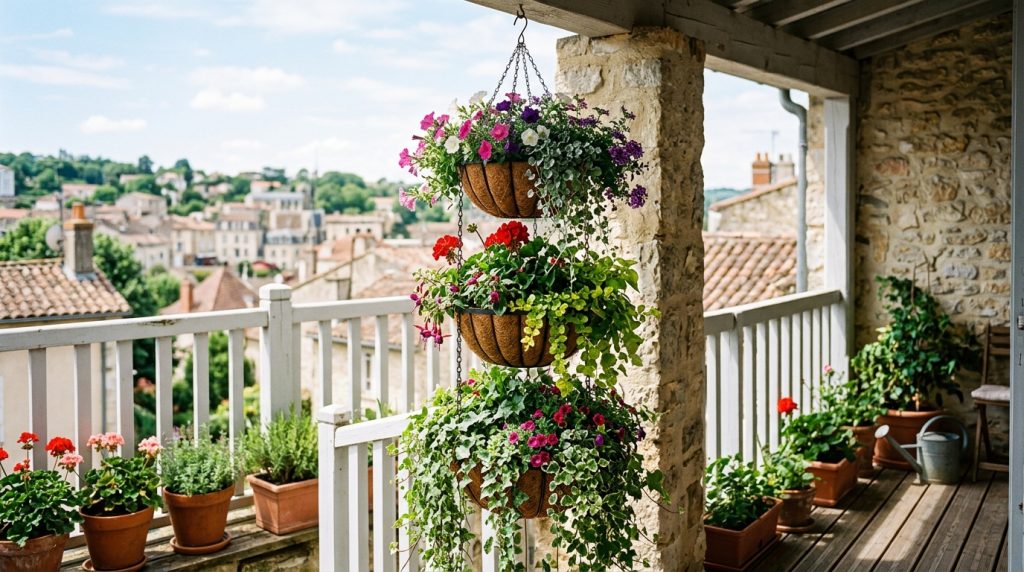
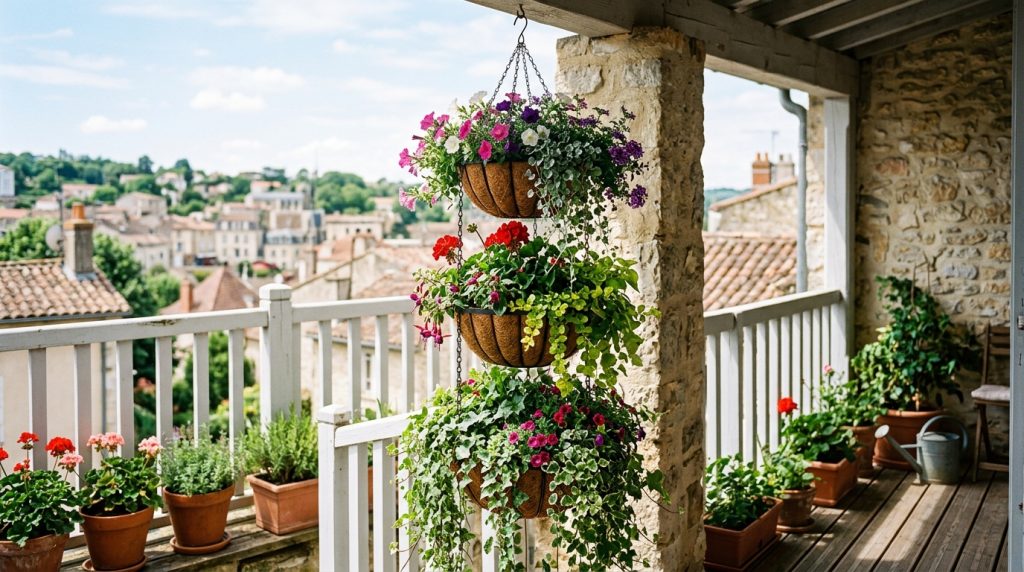
A tiered hanging basket system uses multiple levels to maximize vertical space. This design involves stacking two or more baskets vertically using ropes or chains. Each level holds a separate plant arrangement, creating a layered effect. This structure is useful for small areas where horizontal space is limited. The tiered design allows for a variety of plant types to be displayed in one setup. Lower tiers can hold trailing plants, while upper tiers can feature upright plants. This arrangement creates visual depth and balance. The system also improves organization by separating plant groups. This idea is commonly featured in Pinterest inspiration due to its efficient use of space. The layered structure creates a dynamic look while maintaining a controlled layout. It is suitable for balconies, patios, or indoor corners where vertical decoration is needed.
To execute this design, begin by selecting baskets of similar size and weight. Attach them using evenly spaced ropes or chains to ensure stability. Start assembling from the top basket, securing each level before adding the next. Fill each basket with soil and plants before final hanging to maintain balance. Choose plants with compatible care requirements to simplify maintenance. Install a strong hook that can support the total weight of the system. Hang the structure in a location with adequate light. Water each tier carefully, starting from the top to allow excess water to drain downward. Regular checks ensure the ropes remain secure. This step-by-step process creates a functional and visually organized system. The materials are simple, making it a practical DIY project for beginners.
Idea 4: Colorful Mixed Flower Basket
How to Create
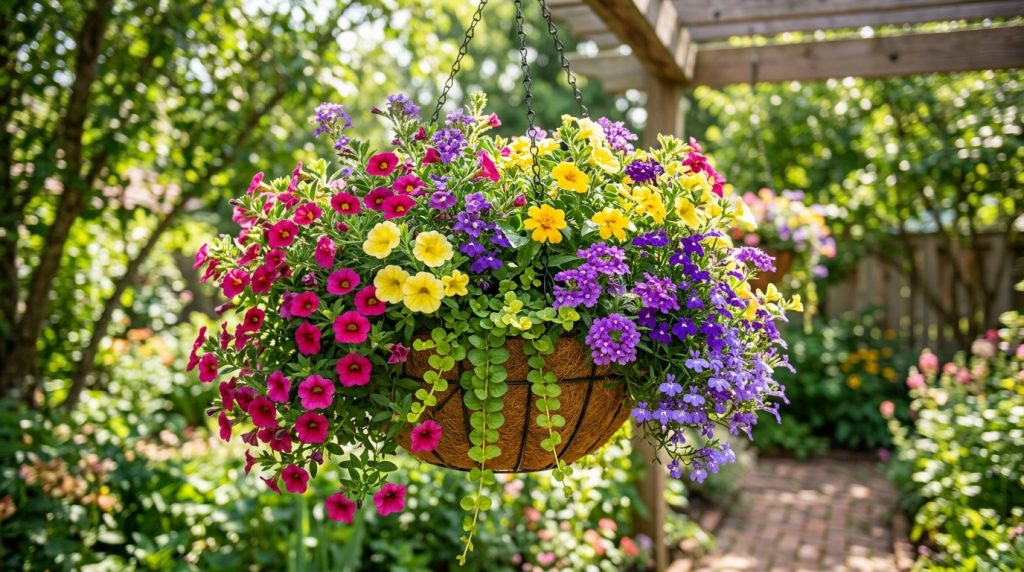
A colorful mixed flower basket focuses on combining different flowering plants to create a vibrant and structured display. This design uses contrasting colors and varied textures to build a visually balanced arrangement. The goal is to achieve a layered composition where each plant contributes to the overall appearance without overcrowding the basket. Typically, one focal plant is placed in the center, surrounded by complementary flowering plants that add depth and color variation. Trailing plants can be included to soften the edges and create a cascading effect. This idea is widely used in Pinterest ideas because it delivers strong visual impact while remaining beginner friendly. It works well for outdoor spaces such as balconies, patios, and garden entrances. The arrangement also supports seasonal updates, allowing plants to be replaced based on availability. This approach combines aesthetic value with practical planting techniques, making it a reliable creative project for home decor and decoration purposes.
To execute this design, begin by selecting a sturdy basket with proper drainage. Add a moisture-retaining liner to support soil stability. Fill the basket with a lightweight potting mix suitable for flowering plants. Insert the central plant first, ensuring it is firmly placed. Arrange surrounding plants evenly, leaving enough space for growth. Include trailing plants along the edges to create a balanced overflow effect. Water the arrangement lightly before hanging to settle the soil. Secure the basket using strong hooks and evenly distributed ropes. Place the basket in an area with sufficient sunlight to support blooming. Regular maintenance includes watering based on plant needs and removing faded flowers to encourage new growth. This step-by-step process ensures a structured and long-lasting result.
Idea 5: Indoor Herb Hanging Basket
Step-by-Step Guide
An indoor herb hanging basket is designed for functional use while maintaining a clean and organized appearance. This setup allows herbs to be easily accessible while saving counter space. It is commonly used in kitchens or near windows where natural light is available. The design focuses on practicality, with each plant selected for its usability in daily cooking. Herbs such as basil, mint, and parsley are suitable choices due to their compact growth patterns. This idea aligns with Pinterest inspiration that combines decoration with functionality. The basket arrangement should remain simple to allow easy harvesting and maintenance. Proper spacing between plants ensures healthy growth and prevents overcrowding. This concept supports organization by grouping herbs in one accessible location. The clean structure also fits well within modern design and minimalist style interiors.
To create this basket, start with a container that includes drainage holes. Line the basket if needed to prevent soil leakage. Add a lightweight potting mix designed for herbs. Plant each herb with enough spacing to allow root development. Water lightly to settle the soil. Attach strong hanging supports to maintain balance. Position the basket near a window with adequate sunlight. Regular care includes trimming herbs to encourage growth and prevent overextension. Watering should be controlled to avoid excess moisture. This setup method provides a clear and practical approach to creating a functional hanging basket. The materials are simple, making it an easy project suitable for beginners.
Idea 6: Rustic Rope Basket Design
How to Make
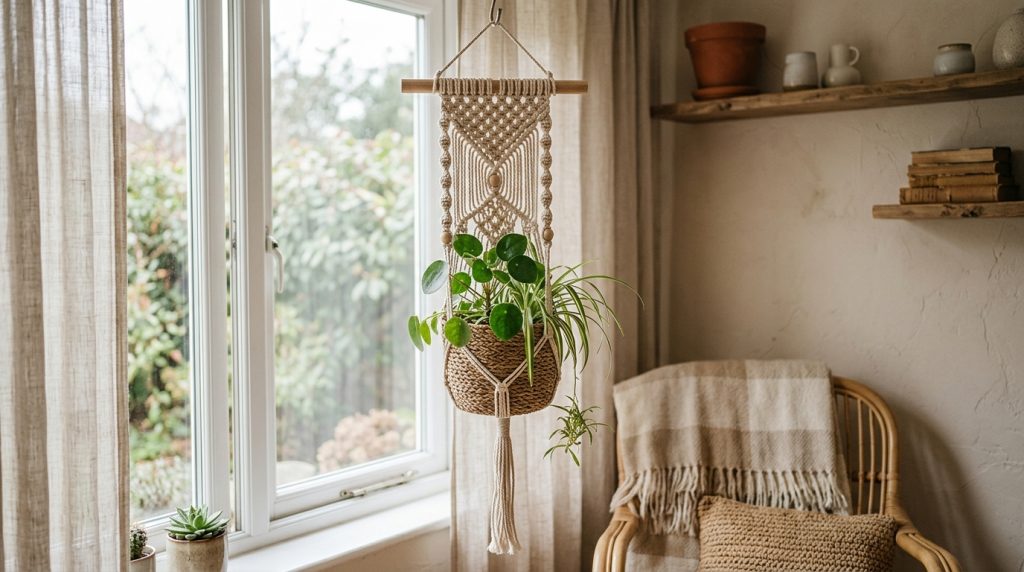
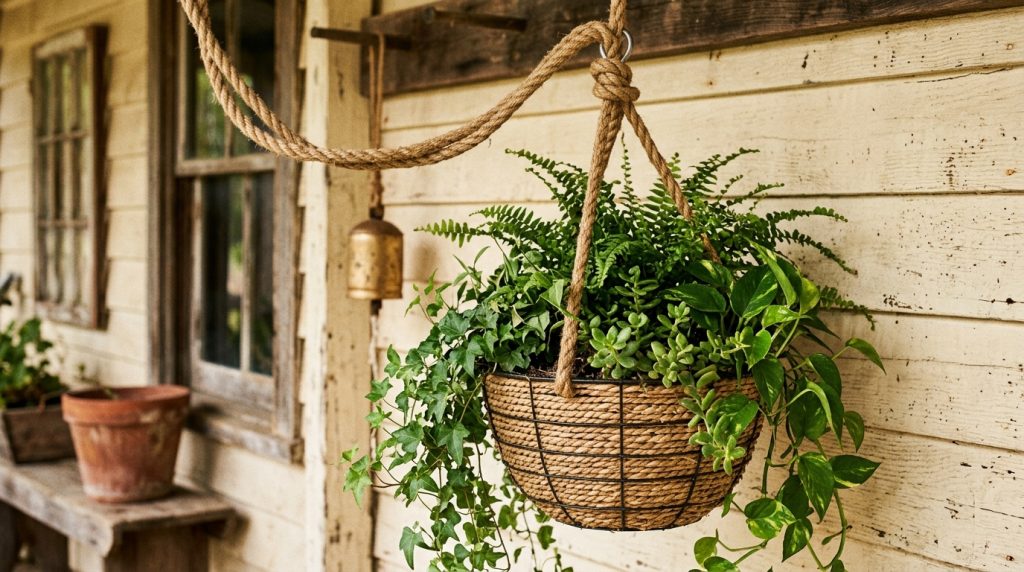
A rustic rope basket design emphasizes natural textures and a simple structure. This idea uses thick rope as the primary support element, creating a visually strong and stable hanging system. The basket itself can be made from natural materials or neutral-toned containers. This design works well in outdoor environments or interiors that incorporate natural elements. The focus is on achieving a balanced look through texture rather than color complexity. Plants with soft greenery are typically used to contrast the rough texture of the rope. This arrangement is commonly featured in Pinterest ideas due to its straightforward construction and aesthetic appeal. The design remains functional while adding depth to the surrounding space. It is suitable for beginners because it does not require complex assembly techniques.
To execute this design, begin by selecting a container with proper drainage. Cut rope into equal lengths and secure them evenly around the basket. Tie the ropes together at the top to form a stable hanging loop. Fill the basket with a lightweight soil mix. Insert plants carefully, ensuring even distribution. Water lightly to settle the soil before hanging. Install a secure hook that can support the weight. Hang the basket at a suitable height for maintenance. Regular checks ensure the rope remains secure and stable. This step-by-step process creates a durable and visually consistent hanging basket. The materials are accessible, making it a practical DIY option.
Idea 7: Hanging Basket Wall Grid
Execution Process
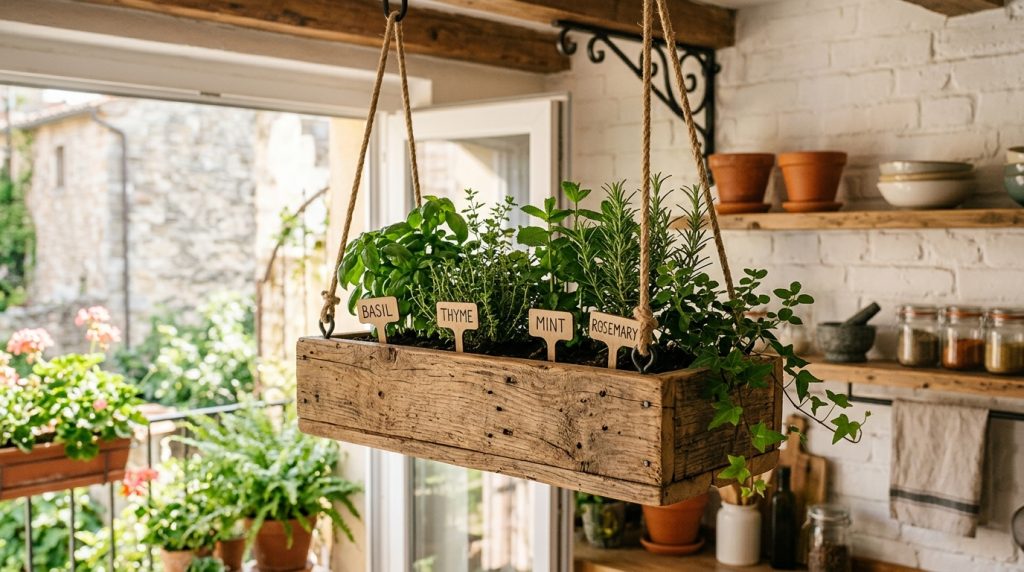
A hanging basket wall grid involves arranging multiple baskets in a structured layout on a vertical surface. This design maximizes space while maintaining a clean and organized appearance. The grid structure allows for equal spacing between baskets, creating a uniform pattern. This idea is commonly used in modern home decor to create a feature wall. Each basket can contain a different plant type, adding variety while maintaining overall consistency. The design supports organization by keeping each plant contained within its designated space. This approach is widely seen in Pinterest ideas due to its structured and visually balanced layout. It is suitable for both indoor and outdoor settings, depending on available wall space.
To create this setup, install a grid frame or evenly spaced hooks on a wall. Ensure each support point can handle the weight of a filled basket. Prepare individual baskets with soil and plants before mounting. Attach each basket securely to its designated position. Maintain equal spacing to preserve the grid structure. Water plants carefully to prevent overflow onto lower baskets. Regular maintenance includes trimming and repositioning plants as needed. This method provides a clear step-by-step guide for creating a structured vertical display. The result is an organized and aesthetically consistent arrangement.
Idea 8: Recycled Container Hanging Basket
How to Create
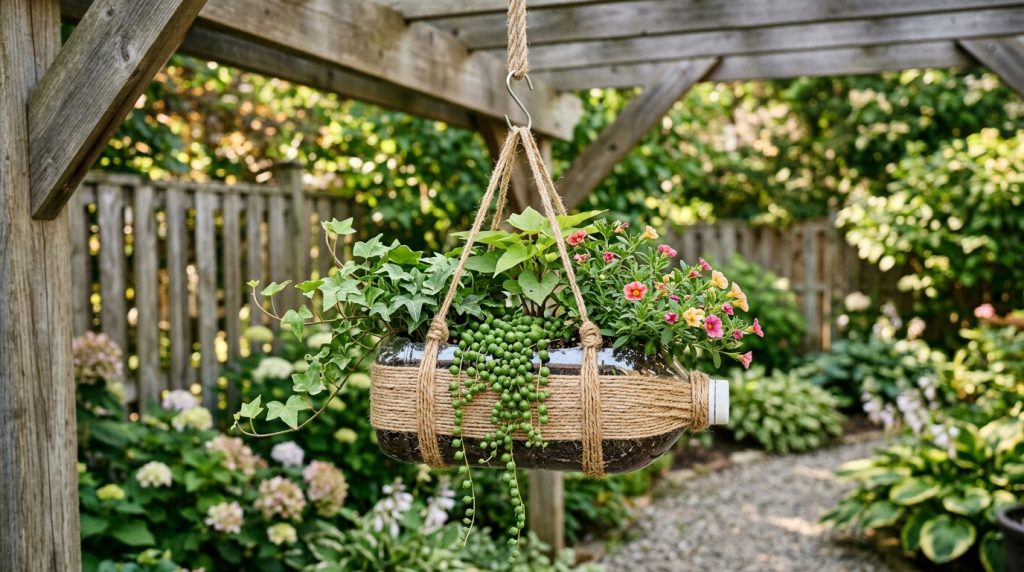
A recycled container hanging basket focuses on reusing materials to create a functional and eco-friendly design. This idea involves transforming everyday containers into plant holders. Suitable items include old buckets, tins, or plastic containers with added drainage holes. The design emphasizes simplicity and resource efficiency. This approach is popular in Pinterest inspiration due to its budget-friendly nature and creative reuse of materials. The appearance can be adjusted using paint or simple finishes to match the surrounding decor. The structure remains practical while reducing material waste. This concept is suitable for beginners because it requires minimal tools and preparation.
To execute this idea, select a clean container and create drainage holes at the bottom. Add a liner if necessary to support soil retention. Fill the container with a lightweight potting mix. Insert plants carefully, ensuring proper spacing. Attach ropes or chains securely to support the container’s weight. Hang the basket in a suitable location with adequate light. Water the plants lightly to avoid overflow. Regular maintenance includes checking the container for wear and ensuring the support system remains stable. This step-by-step method provides a practical and accessible way to create a hanging basket using recycled materials.
Idea 9: Wooden Box Hanging Planter
Setup Method
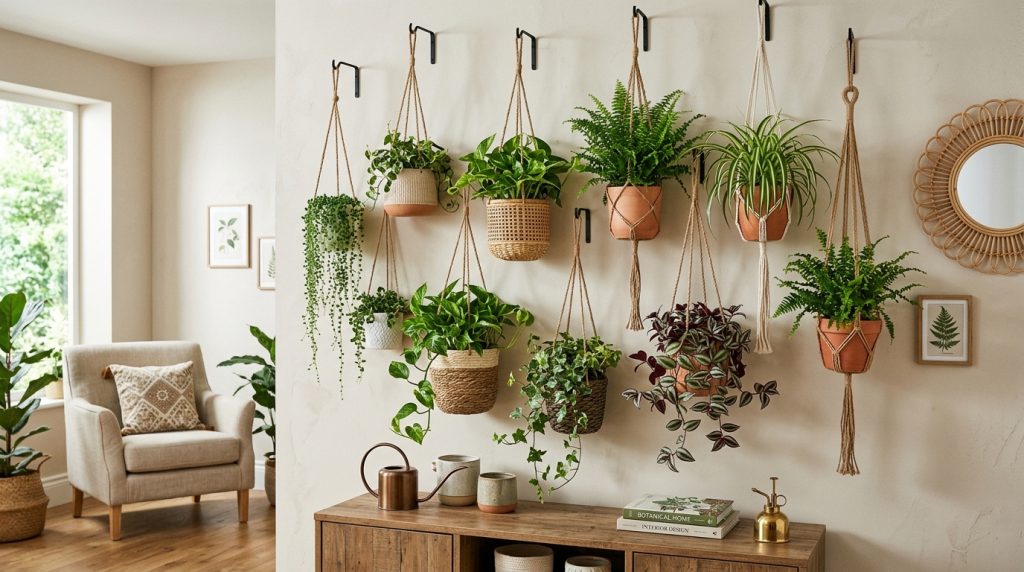
A wooden box hanging planter uses a structured container to create a stable and organized plant display. This design is commonly used for herbs or small flowering plants. The wooden structure provides durability and a natural appearance that fits various decor styles. The rectangular shape allows for even plant spacing and controlled growth. This idea is frequently used in Pinterest ideas for its combination of practicality and visual structure. It works well in both indoor and outdoor environments. The design supports organization by keeping plants aligned and easy to maintain.
To create this planter, select a wooden box with proper drainage holes. Line the interior if needed to protect the wood. Add a lightweight soil mix suitable for the selected plants. Arrange plants evenly within the box. Attach strong chains or ropes to each corner to maintain balance. Secure the planter to a stable hook or bracket. Water the plants carefully to prevent excess moisture buildup. Regular maintenance includes trimming and checking the wood for durability. This step-by-step setup ensures a stable and functional hanging planter suitable for various uses.
Idea 10: Minimal White Hanging Pot
How to Create
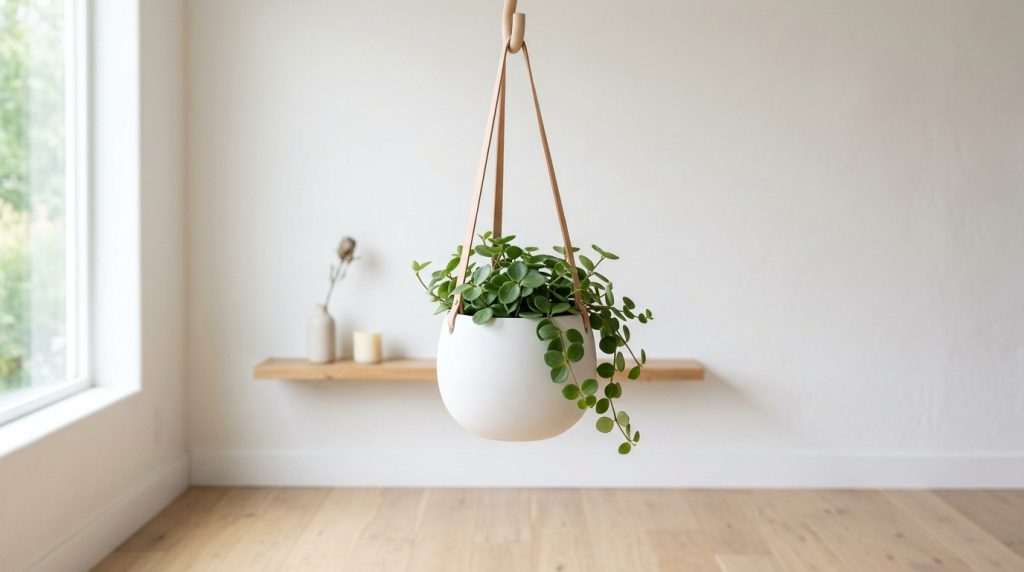
A minimal white hanging pot focuses on simplicity and clean design. This idea uses a plain container with a neutral color to highlight the plant itself. The design aligns with modern design and minimalist style principles. It is commonly used in indoor settings where simplicity enhances the overall decor. Plants with defined shapes or subtle textures work best in this arrangement. The clean appearance makes it suitable for various spaces without overwhelming the environment. This idea is widely featured in Pinterest ideas due to its simplicity and versatility.
To execute this design, select a white pot with proper drainage. Add a lightweight potting mix to reduce weight. Insert a single plant or a small group of similar plants. Attach a simple hanging system using rope or chain. Ensure the pot is balanced before hanging. Place it in an area with appropriate light conditions. Water the plant carefully to avoid excess moisture. Regular maintenance includes trimming and cleaning the pot surface to maintain its appearance. This step-by-step method provides a clear and practical approach to creating a minimalist hanging basket.
Common Beginner Mistakes and How to Avoid Them
One common mistake in hanging flower basket projects is improper weight planning. Many beginners overlook the combined weight of soil, plants, and water, which can lead to unstable installations. Using weak hooks or thin ropes increases the risk of failure. Another frequent issue is poor plant selection. Mixing plants with different light and watering needs creates inconsistent growth and maintenance challenges. Overwatering is also a common problem, especially in baskets without proper drainage systems. This can lead to root damage and reduced plant health. Incorrect placement is another mistake, as some baskets are placed in areas with insufficient light. To avoid these issues, always calculate weight capacity, use strong support systems, and select plants with similar care requirements. Ensure proper drainage and follow a consistent watering schedule. Planning and preparation reduce these risks significantly and improve overall results.
Practical Tips for Better Results
Improving hanging basket results requires consistent maintenance and thoughtful planning. Use lightweight soil mixes to reduce strain on support systems. Rotate baskets occasionally to ensure even light exposure. Trim plants regularly to maintain shape and prevent overcrowding. Use moisture-retaining liners to reduce watering frequency. Group similar plants together to simplify care routines. Install hooks in secure locations such as beams or reinforced ceilings. Adjust height placement based on accessibility for watering and trimming. These practical steps enhance both functionality and appearance. Consistency in care ensures long-term success and maintains the aesthetic quality of the arrangement.
Styling, Presentation, or Organization Ideas
Styling hanging baskets involves arranging them in a way that complements the surrounding space. Use symmetrical placement for a balanced look or staggered heights for a dynamic arrangement. Combine different basket styles while maintaining a consistent color palette. Position baskets near natural light sources to highlight plant textures. Use neutral tones for a minimalist style or mix textures for added depth. Organize baskets based on plant type or growth pattern to maintain visual order. This structured approach enhances the overall presentation and aligns with modern Pinterest ideas focused on clean and organized layouts.
Budget or Time Planning
Hanging flower basket projects can be completed efficiently with proper planning. Using locally available materials reduces overall cost. Repurposing containers or baskets is an effective budget idea. Allocate time for preparation, including plant selection and installation setup. Most basic designs can be completed within a few hours. Maintenance time should also be considered, as regular watering and trimming are required. Planning ahead ensures that the project remains manageable and cost-effective. This approach makes the process accessible for beginners while maintaining quality results.
Creative Expansion and Advanced Inspiration
Advanced variations of hanging baskets include integrating lighting elements or combining baskets with wall-mounted structures. Experimenting with different plant arrangements can create unique visual effects. Using contrasting textures or layered designs adds complexity to the project. Expanding into larger installations, such as full vertical gardens, builds on the same principles. These creative ideas allow for continuous development beyond basic designs. With experience, more complex arrangements can be achieved while maintaining organization and structure.