
10 Nursery Colorful Ideas
Introduction
A colorful nursery is designed to support visual stimulation, comfort, and organized functionality within a child’s room. In many Pinterest ideas, color is used as a structured design tool rather than random decoration. It helps define zones, improve mood, and create a balanced environment. A well-planned nursery includes controlled color combinations, practical furniture placement, and safe materials. This article explains how to design a colorful nursery using clear, step by step methods. It focuses on creating a space that supports both daily routines and visual clarity. Readers will learn how to apply color in walls, furniture, and accessories without causing visual overload. Each idea is structured as an easy project that can be completed with basic tools and simple planning. The goal is to combine aesthetic value with organization and usability. These creative ideas are suitable for beginners and can be adapted to different room sizes. With proper planning, a colorful nursery becomes a functional and well-organized part of home decor.
Why This Idea Is Trending or Useful
Colorful nursery designs are trending because they combine visual development with practical home decor solutions. Bright and balanced color schemes are often used to stimulate attention and create a structured environment for children. In modern design, color is applied with intention to avoid clutter while maintaining visual interest. Pinterest ideas frequently highlight nurseries that use coordinated palettes to achieve both aesthetic and functional goals. This approach is useful because it allows parents to organize items clearly while creating a visually engaging space. The DIY aspect makes it accessible for beginners, as many elements such as wall painting, decor placement, and storage solutions can be completed without professional assistance. Another reason for its popularity is adaptability. Color schemes and decorative elements can be updated over time without major changes. This flexibility supports long-term usability. By combining organization, safety, and visual clarity, colorful nursery ideas provide a structured and practical solution for modern living spaces.
Materials and Preparation
Preparing a colorful nursery requires careful selection of materials and clear planning. Start by measuring the room to determine layout and placement of furniture. Common materials include wall paint, fabric items, storage bins, rugs, and decorative accessories. Choose non-toxic and safe materials suitable for a child’s environment. Basic tools may include a measuring tape, paint brushes, rollers, and cleaning supplies. Planning should focus on defining zones such as sleeping, playing, and storage. Select a color palette with two or three main tones to maintain consistency. Avoid using too many colors, as this can reduce clarity. Clean the room thoroughly before starting any work. Prepare surfaces by smoothing walls and ensuring proper lighting conditions. Group materials based on their function to simplify the process. Consider how each element will contribute to both decoration and organization. This preparation stage ensures that the project remains structured, safe, and aligned with both practical and aesthetic goals.
Idea 1: Soft Pastel Color Palette Nursery
How to Create
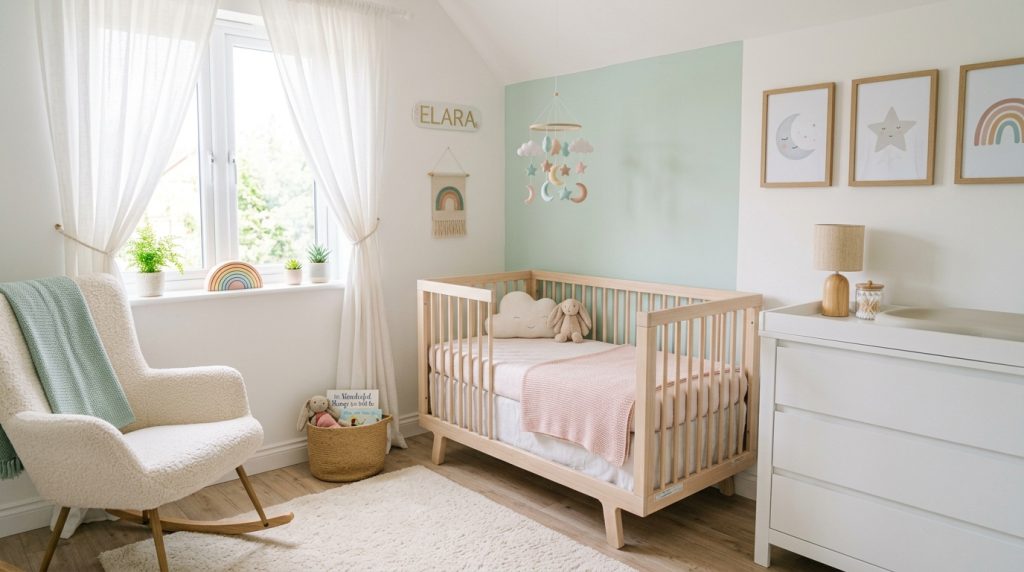
A soft pastel color palette nursery uses light tones such as pale pink, mint green, soft blue, and warm beige to create a calm and balanced environment. This concept focuses on reducing visual intensity while maintaining gentle color variation. Pastel shades are commonly used in home decor because they reflect light evenly and support a peaceful atmosphere. In this design, colors are distributed across walls, bedding, and decorative elements in a controlled manner. The goal is to create a consistent and soothing space without sharp contrasts. This approach aligns with minimalist style while still offering visual interest. It is suitable for small rooms because lighter colors make the space appear larger. This method also supports organization by clearly defining areas without overwhelming the layout.
To create this setup, begin by selecting two or three pastel colors as the main palette. Apply the primary color to the walls using even paint strokes. Use secondary colors in textiles such as curtains, rugs, and cushions. Keep furniture in neutral tones to maintain balance. Arrange items so that colors are evenly distributed throughout the room. Avoid clustering similar shades in one area. Ensure proper lighting to enhance the softness of the colors. This step by step process creates a calm and organized nursery environment.
Idea 2: Rainbow Accent Wall Nursery
How to Create
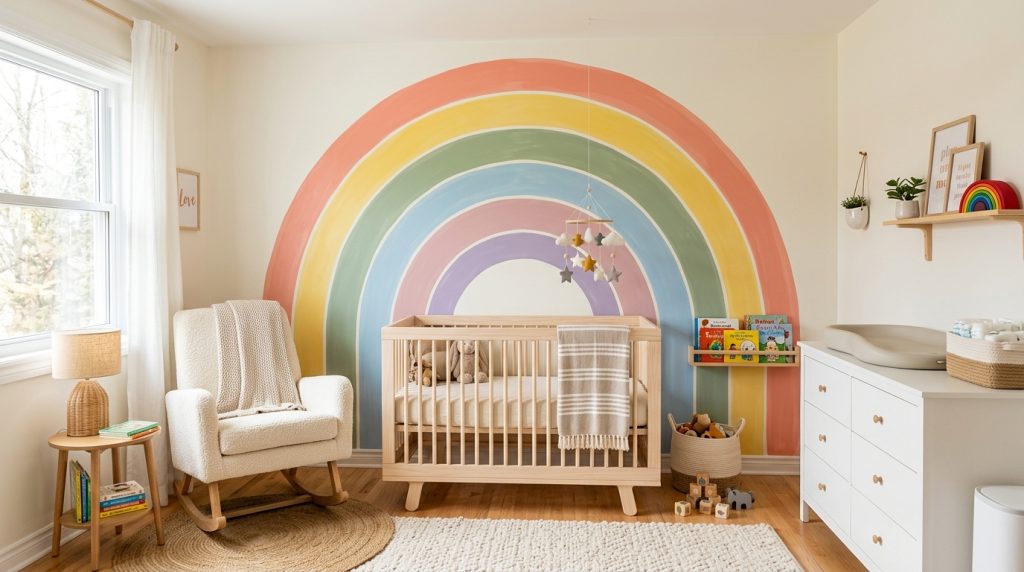
A rainbow accent wall nursery introduces multiple colors in a structured pattern on one wall. This design focuses on creating a focal point while keeping the rest of the room simple. The rainbow pattern can be applied in arcs, stripes, or geometric shapes. This method allows the use of vibrant colors without overwhelming the entire space. In Pinterest ideas, accent walls are used to define visual interest while maintaining overall balance. The rest of the room typically uses neutral tones to support the feature wall. This approach combines creativity with controlled design.
To implement this idea, start by selecting a wall that will serve as the focal point. Choose a set of colors that transition smoothly. Mark the pattern using measuring tools to ensure accuracy. Apply paint carefully, allowing each section to dry before adding another. Keep surrounding walls neutral to maintain contrast. Add simple decor that complements the colors. This execution process ensures a structured and visually engaging nursery design.
Idea 3: Color-Zoned Nursery Layout
How to Create
A color-zoned nursery layout divides the room into functional areas using different colors. Each zone represents a specific purpose such as sleeping, playing, or storage. This method improves organization by visually separating activities. In modern design, zoning helps maintain order while supporting efficient use of space. Colors are applied in a controlled manner to define boundaries without physical partitions. This approach is practical for both small and large rooms.
To create this layout, begin by identifying key zones within the room. Assign a distinct color to each area while maintaining overall harmony. Apply colors through wall sections, rugs, or furniture. Ensure transitions between zones are smooth. Avoid sharp contrasts that disrupt balance. Arrange furniture according to each zone’s function. This step by step method creates a structured and organized nursery environment.
Idea 4: Colorful Storage Organization System
How to Create
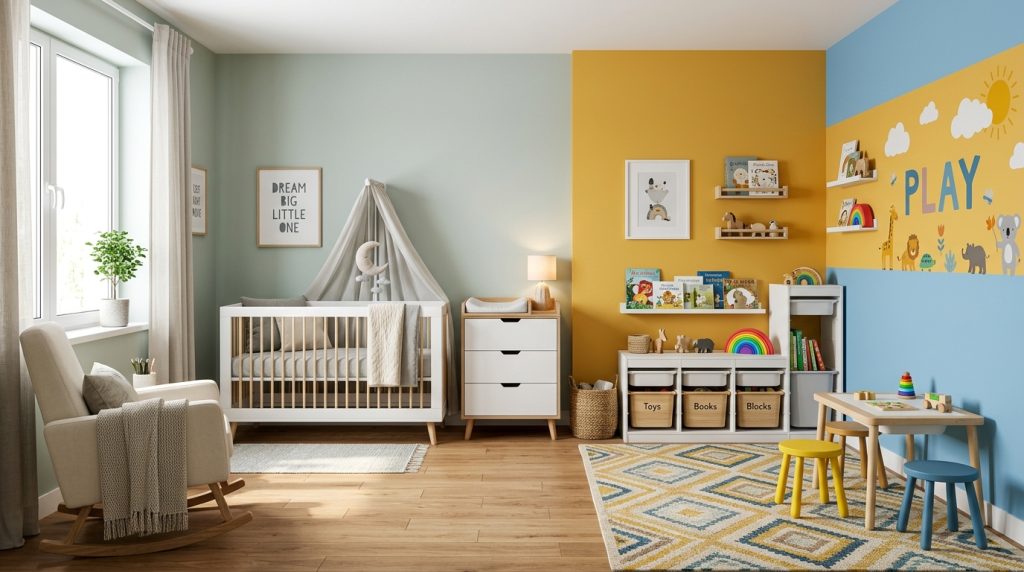
A colorful storage organization system uses color-coded bins and containers to manage items efficiently. This method combines organization with visual clarity. Each color represents a category, making it easier to locate items quickly. This approach supports both functionality and aesthetic consistency.
To set up this system, select storage bins in different colors. Assign each color to a specific category such as toys or clothing. Place bins in accessible locations. Label them clearly for easy identification. Maintain consistency in placement to avoid confusion. This execution process ensures an organized and visually clear nursery.
Idea 5: Patterned Textile Color Theme
How to Create
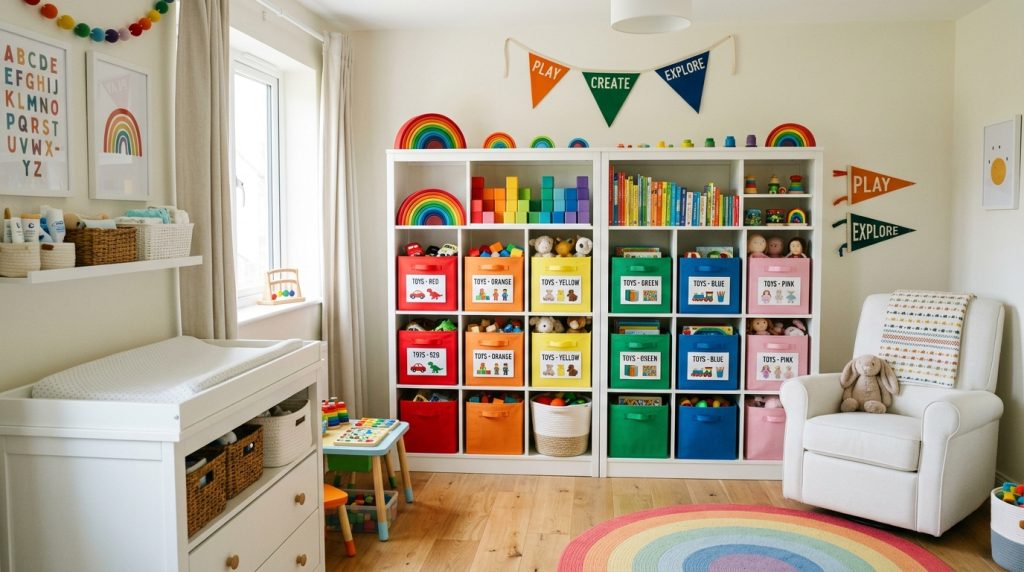
Patterned textiles introduce color through fabrics such as rugs, curtains, and bedding. This method adds variation without changing wall colors. Patterns can include stripes, shapes, or simple prints. This approach is useful for adding detail while maintaining a controlled design.
To apply this idea, choose textiles that share a common color palette. Distribute patterns evenly across the room. Avoid mixing too many patterns to maintain clarity. Ensure fabrics are easy to clean and safe. This step by step process creates a balanced and practical setup.
Idea 6: Bright Play Corner Setup
How to Create
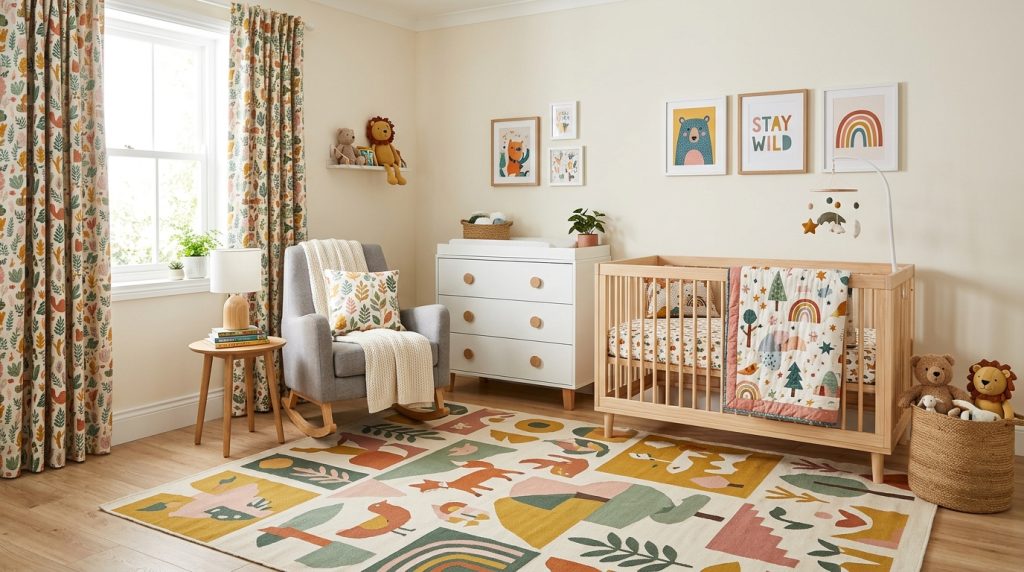
A bright play corner uses vibrant colors to define an active area. This section is designed for engagement and movement. Colors are used to stimulate attention while maintaining structure.
To create this space, select a corner of the room and apply brighter colors through rugs or wall decals. Add storage for toys within reach. Keep the area organized to avoid clutter. This method creates a functional and engaging play zone.
Idea 7: Neutral Base with Color Accents
How to Create
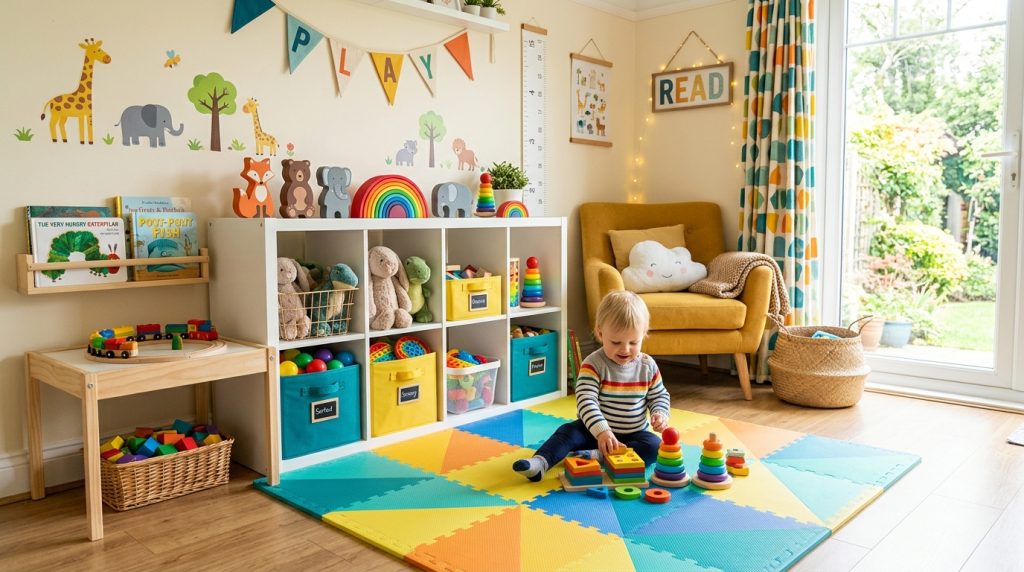
This approach uses a neutral base with small color accents. The main surfaces remain simple while decor items introduce color. This method maintains balance and flexibility.
To implement this idea, keep walls and furniture neutral. Add color through cushions, artwork, or small accessories. Adjust accents over time as needed. This execution ensures adaptability and consistency.
Idea 8: Ceiling Color Feature Nursery
How to Create
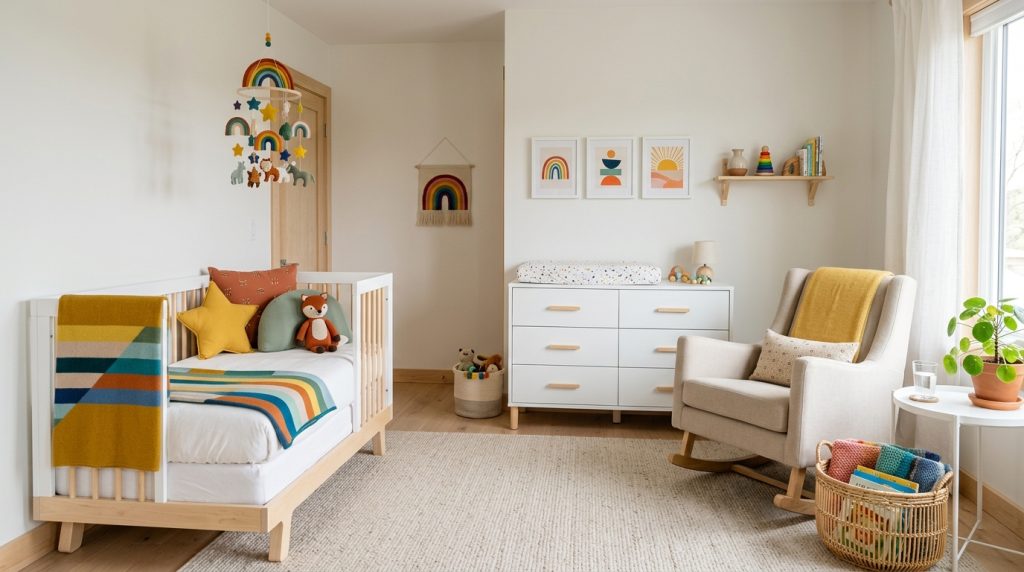
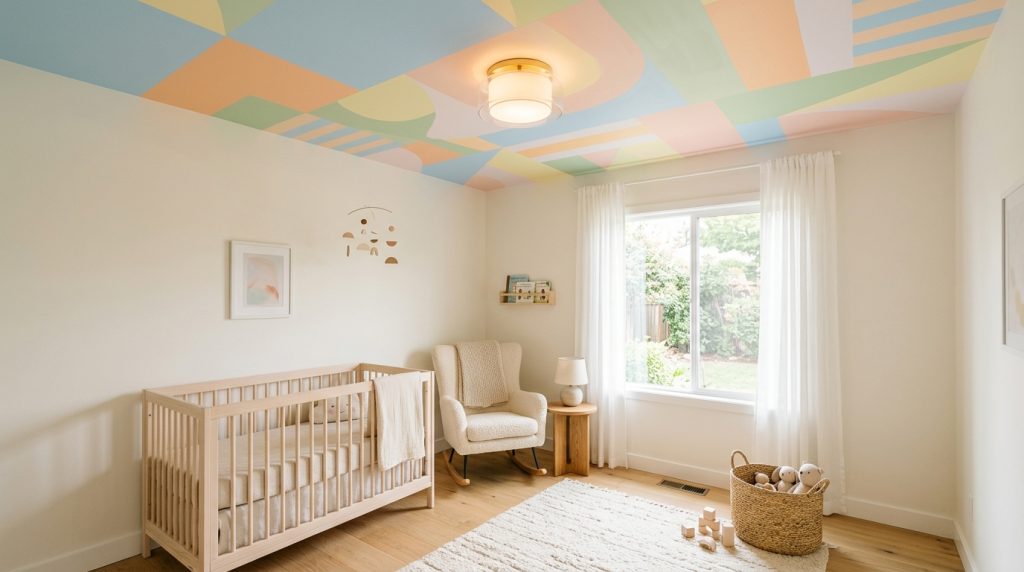
A ceiling color feature adds visual interest above eye level. This method uses color on the ceiling while keeping walls simple. It creates depth without cluttering the room.
To apply this, choose a soft color for the ceiling. Ensure even paint application. Keep wall decor minimal to highlight the feature. This approach enhances visual balance.
Idea 9: Educational Color Display Wall
How to Create
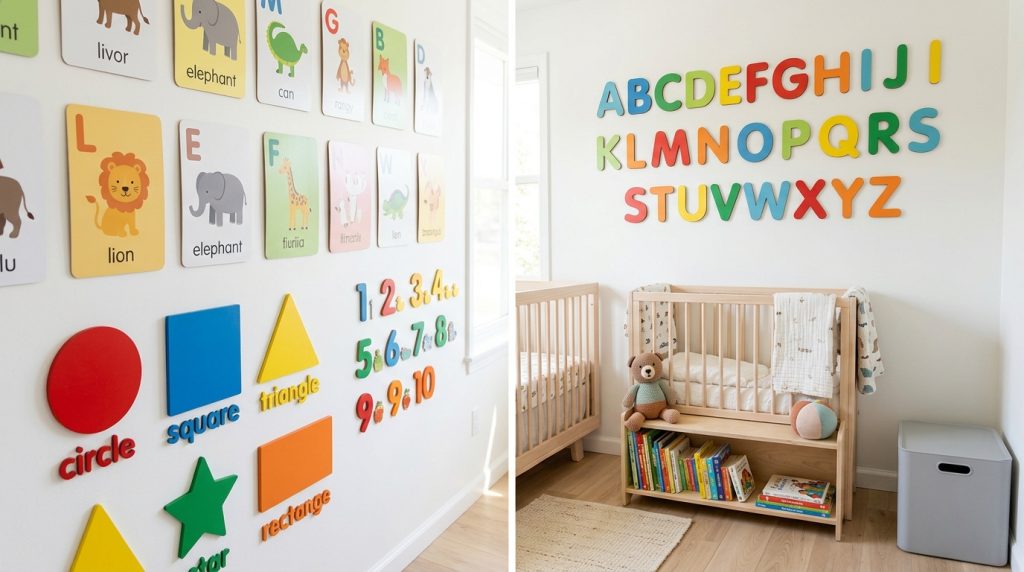
An educational color display wall uses colors as learning tools. This design includes shapes, letters, or simple visuals arranged in an organized manner.
To create this setup, select a wall and apply structured patterns or decals. Keep spacing consistent. Ensure items are securely fixed. This method combines decoration with learning.
Idea 10: Seasonal Color Rotation Nursery
How to Create
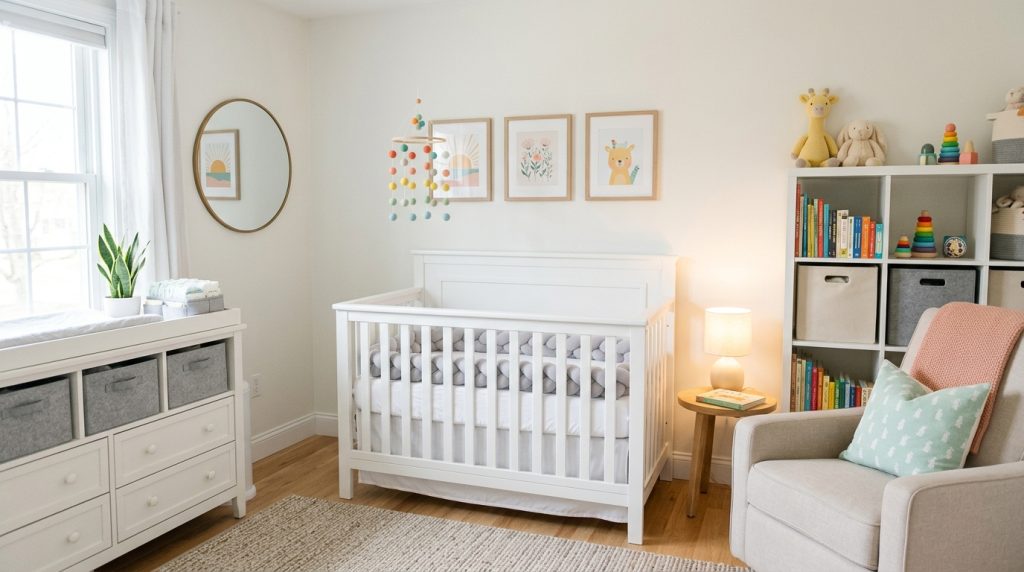
Seasonal color rotation allows periodic updates to the nursery. This method keeps the space fresh without major changes.
To implement this, maintain a base design and swap out accessories based on season. Store unused items properly. Ensure new items match the existing layout. This step by step approach maintains consistency.
Common Beginner Mistakes and How to Avoid Them
One common mistake is using too many colors, which creates visual clutter. Limit the palette to maintain clarity. Poor planning can lead to imbalance, so measure and plan layouts before starting. Ignoring safety is another issue. Always use safe materials and secure installations. Avoid placing items too close together, as this reduces accessibility. Maintain clear pathways and structured organization.
Practical Tips for Better Results
Start with a clear color plan and stick to it. Use simple materials for easy maintenance. Keep frequently used items accessible. Maintain consistent spacing and alignment. Clean regularly to preserve appearance. Adjust elements gradually to improve layout.
Styling, Presentation, or Organization Ideas
Define a consistent theme across the nursery. Arrange items in groups for better structure. Use lighting to highlight key areas. Keep similar items together. Maintain balance between decoration and function.
Budget or Time Planning
Reuse existing items where possible. Set a budget for additional materials. Break the project into smaller steps. Complete one section at a time. Avoid rushing to maintain quality.
Creative Expansion and Advanced Inspiration
Expand the design by adding layered lighting or modular storage. Experiment with new layouts while maintaining structure. Combine multiple ideas for a more detailed setup. Adjust elements over time to keep the nursery updated and functional.