
10 Shelves Decoration Ideas
Introduction
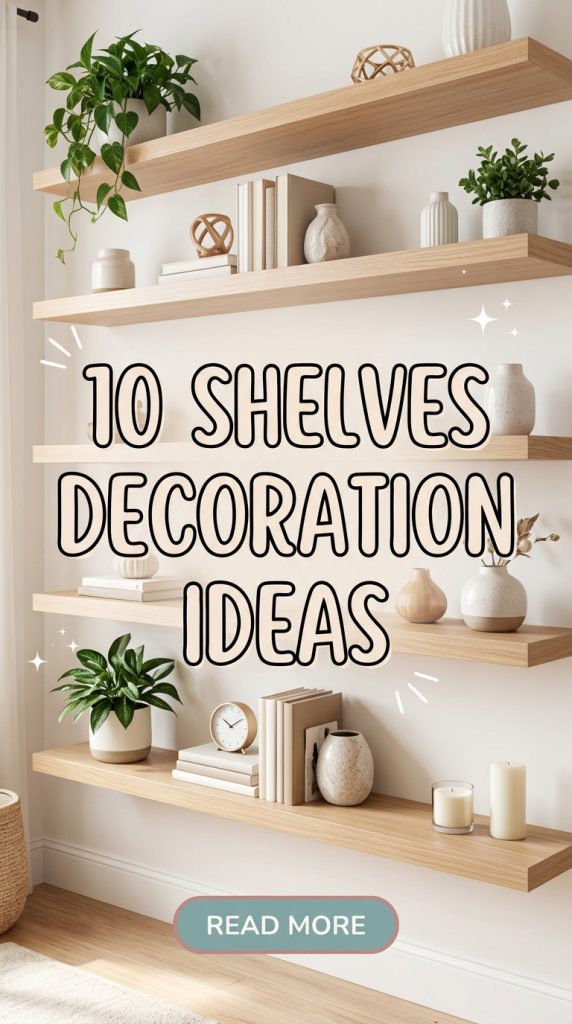
Shelves are a central element in modern home decor because they combine storage with visual presentation. They allow structured organization while also serving as a display area for decorative objects. In many Pinterest ideas, shelves are used to balance functionality with aesthetic value. This approach helps maximize wall space without adding bulky furniture. Shelves can be installed in living rooms, bedrooms, kitchens, and hallways, making them adaptable to different environments. This article explains practical and beginner friendly ways to decorate shelves using clear methods and step by step thinking. Each idea focuses on creating a clean, organized, and visually balanced arrangement. Readers will learn how to use materials effectively, plan layouts, and apply simple styling techniques. The goal is to transform ordinary shelves into purposeful design features. These creative ideas are suitable for both small and large spaces. With proper planning and execution, shelf decoration becomes an easy project that improves both organization and overall interior appearance.
Why This Idea Is Trending or Useful
Shelf decoration has become a trending idea because it provides a simple solution for combining storage and design. Many modern homes require efficient use of limited space, and shelves offer vertical organization without occupying floor area. This makes them suitable for small apartments and compact rooms. In Pinterest ideas, shelves are often used to create structured displays that highlight personal style while maintaining order. The DIY aspect also increases their popularity because shelves can be styled without specialized skills. Most setups require basic materials and simple planning, making them accessible for beginners. Another reason for their relevance is flexibility. Shelves can be rearranged, updated, and restyled according to seasonal changes or evolving preferences. This allows continuous improvement without major renovation. From minimalist style layouts to layered decorative arrangements, shelves support multiple design approaches. Their ability to blend practical storage with creative project execution makes them a reliable solution for modern home decor and organization needs.
Materials and Preparation
Before starting any shelf decoration project, proper preparation ensures a clean and structured result. Begin by identifying the type of shelves available, such as floating shelves, built-in units, or wall-mounted brackets. Measure the width, depth, and spacing to determine how many items can be placed without overcrowding. Common materials include decorative objects, books, storage boxes, small plants, and framed artwork. Supporting tools may include a measuring tape, level tool, cleaning cloth, and optional adhesive strips for stability. Planning is essential to avoid imbalance or clutter. Start by selecting a color palette or theme that aligns with the overall room design. This helps maintain consistency across the arrangement. Clean the shelves thoroughly before placing any items to ensure a polished appearance. Group similar objects together before arranging them on the shelf. This allows better visualization of spacing and balance. Preparation also includes deciding focal points and leaving negative space. Proper planning leads to a well-organized and visually effective shelf decoration.
Idea 1: Minimalist Shelf Arrangement
How to Create
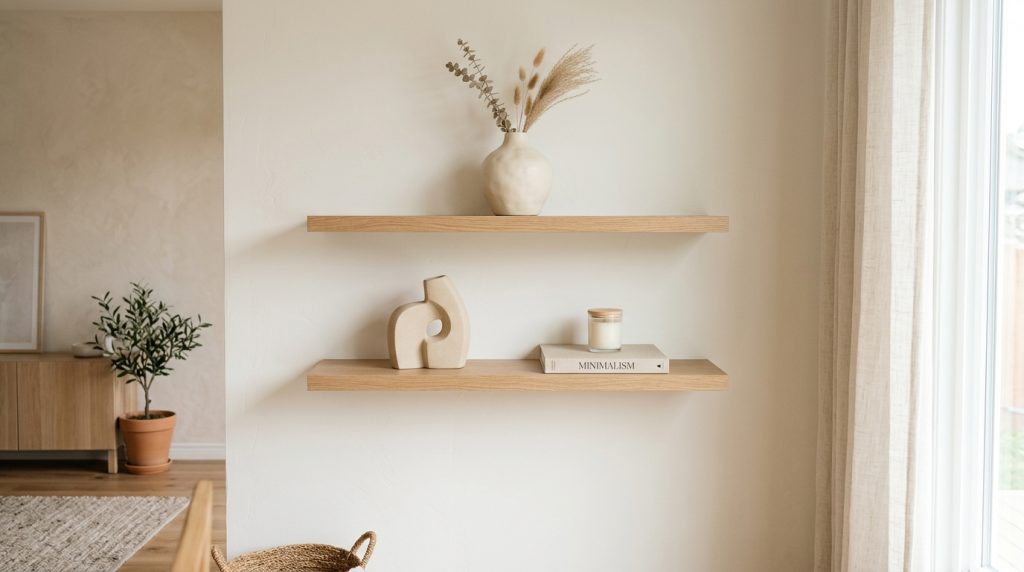
A minimalist shelf arrangement focuses on simplicity, balance, and controlled use of space. This approach limits the number of objects placed on each shelf to avoid visual clutter. The primary goal is to highlight a few selected items rather than filling every available space. Neutral colors such as white, beige, or soft gray are commonly used to maintain consistency. Objects should have clean shapes and simple forms, which support a modern design aesthetic. In this method, negative space is equally important as the items themselves. Leaving empty areas allows each object to stand out clearly. This approach is widely used in Pinterest ideas because it creates a calm and structured appearance. It also works well in small spaces where excessive decoration can feel overwhelming. Minimalist shelf decoration emphasizes intentional placement rather than quantity, making it suitable for those seeking a clean and organized look.
To create this setup, start by selecting two or three items per shelf. Choose objects with different heights to create subtle variation. For example, combine a small decorative item with a slightly taller object. Place heavier or larger items toward the ends or center to maintain balance. Use a consistent color palette to avoid visual confusion. Arrange items in small groups rather than spreading them evenly across the shelf. Step back and review the arrangement to ensure spacing feels even. Adjust positions until the layout appears stable and uncluttered. Avoid adding extra elements unless necessary. This step by step process ensures the final result remains aligned with minimalist style principles while maintaining practical organization.
Idea 2: Layered Book and Decor Styling
How to Create
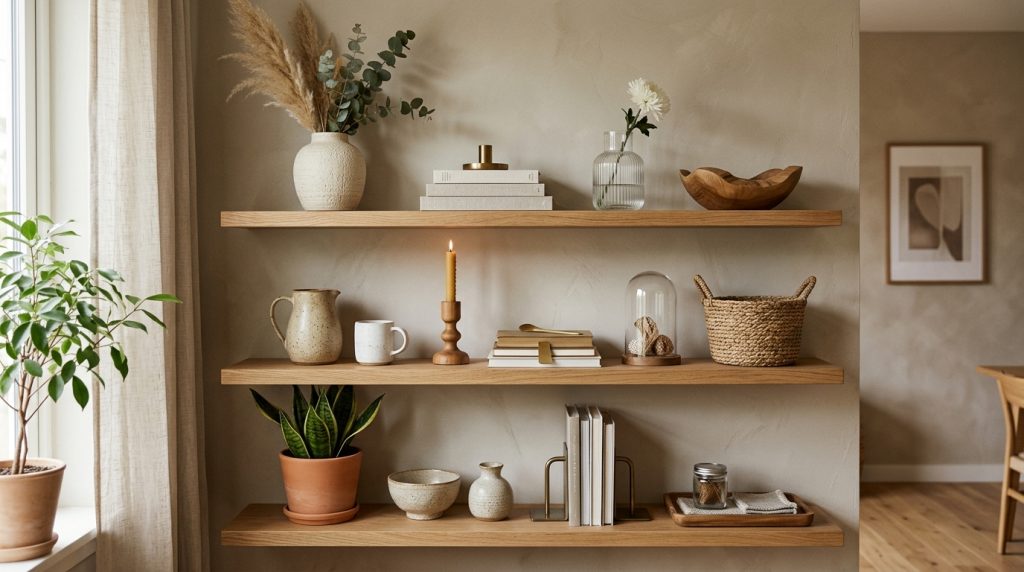
Layered book and decor styling combines books with decorative elements to create depth and structure. This method uses books as both functional items and visual supports for other objects. Books can be arranged vertically or stacked horizontally to form a base for decor pieces. This approach is common in home decor because it introduces variation in height and texture. The layered arrangement creates a sense of depth, making the shelf appear more dynamic. Books also add color and pattern through their covers, contributing to the overall aesthetic. This style is practical because it integrates storage with decoration. It works well in living rooms, study areas, and bedrooms. By combining reading materials with display items, the shelf becomes both functional and visually appealing.
To implement this method, begin by sorting books by size or color. Place a few books upright on one side of the shelf. Next, stack two or three books horizontally in another section. Use the stacked books as a base to place a small decorative object on top. Ensure that items placed above books are stable and balanced. Maintain spacing between groups to prevent overcrowding. Alternate between vertical and horizontal arrangements across the shelf to create variation. Adjust alignment so that the overall composition looks structured. This step by step approach allows beginners to achieve a balanced and organized shelf using simple materials and clear planning.
Idea 3: Symmetrical Shelf Design
How to Create
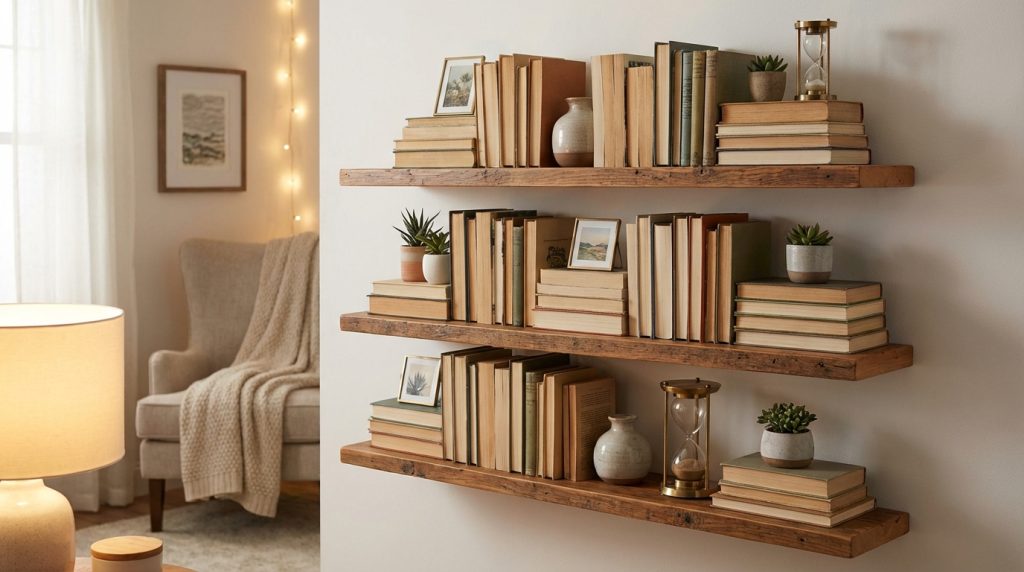
Symmetrical shelf design focuses on creating balance through mirrored arrangements. This method involves placing similar objects on both sides of the shelf to achieve visual stability. Symmetry is widely used in modern design because it creates a sense of order and clarity. Each side of the shelf reflects the other in terms of object type, size, or placement. This approach works well in formal living spaces where structured layouts are preferred. It is also suitable for beginners because it follows a predictable pattern. Symmetry reduces the complexity of decision-making and helps maintain consistency. The result is a clean and organized shelf that aligns with structured home decor principles.
To create a symmetrical design, start by identifying the center point of the shelf. Place a main object or focal item in the middle. Next, add matching or similar items on both sides. For example, place identical objects at equal distances from the center. Ensure that heights and spacing are consistent across both sides. Use pairs of items such as two small plants or two decorative objects. Step back to check alignment and adjust as needed. Avoid adding unmatched elements that disrupt the balance. This execution process ensures a stable and visually balanced arrangement that is easy to maintain.
Idea 4: Plant-Focused Shelf Styling
How to Create
Plant-focused shelf styling uses greenery as the primary decorative element. This approach introduces natural texture and soft contrast to structured spaces. Plants vary in shape, size, and color, making them versatile for shelf decoration. Small indoor plants are commonly used because they fit easily within limited shelf depth. Trailing plants can add vertical movement, while compact plants provide structure. This style is popular in Pinterest ideas because it enhances the visual freshness of a room. It also supports a natural design approach without requiring complex materials. Plant-based decoration works well in living areas, kitchens, and workspaces.
To set up this arrangement, begin by selecting a mix of small and medium-sized plants. Place larger plants at one end of the shelf to anchor the layout. Add smaller plants in between to create variation. Use trailing plants near the edges so they can extend downward naturally. Ensure that containers are consistent in color or material to maintain visual unity. Leave space between plants to prevent overcrowding. Consider light requirements and position shelves accordingly. Water and maintain plants regularly to preserve their appearance. This step by step setup creates a balanced and functional plant display that enhances both decor and atmosphere.
Idea 5: Color-Coordinated Shelf Styling
How to Create
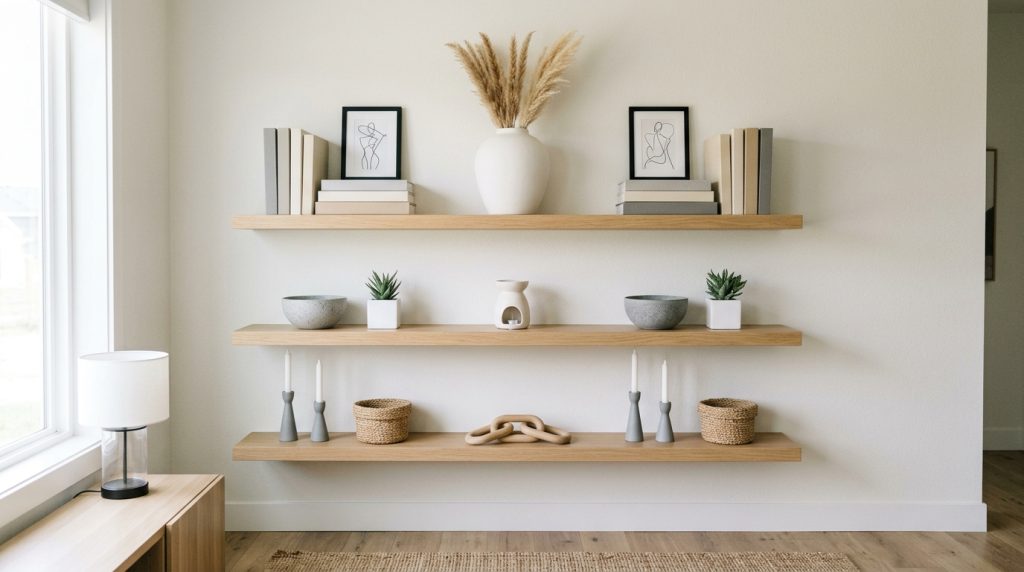
Color-coordinated shelf styling focuses on organizing objects based on a consistent color palette. This method improves visual harmony by limiting the number of colors displayed on each shelf. A defined palette, such as neutral tones or soft pastels, helps maintain a clean and structured look. In many Pinterest ideas, color coordination is used to create an aesthetic arrangement without adding complexity. This approach works well in both minimalist style and more detailed setups because it controls visual noise. Objects such as books, storage boxes, and decorative items can be grouped by similar shades to form a cohesive display. This method also enhances readability of the arrangement by reducing contrast between unrelated colors. Color coordination is especially useful in open shelves where items are fully visible. It creates a unified appearance that aligns with modern design principles and supports better organization.
To apply this method, start by selecting a primary color scheme. Choose two to three colors that match the room’s overall design. Gather items that fit within this palette and remove those that do not. Arrange objects by grouping similar colors together rather than distributing them randomly. Place darker shades at the base or ends to anchor the composition. Use lighter tones toward the center or upper shelves to maintain balance. Books can be arranged with spines facing outward based on color similarity. Adjust spacing to ensure each group remains visually distinct. Step back and evaluate the arrangement to confirm consistency. This step by step process results in a well-organized and visually cohesive shelf display.
Idea 6: Functional Storage Shelf Design
How to Create
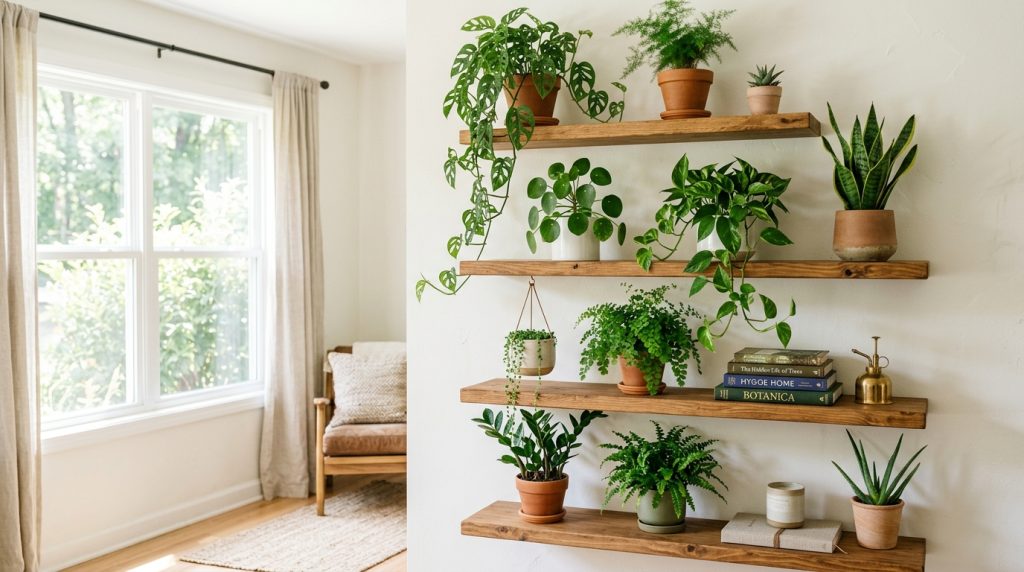
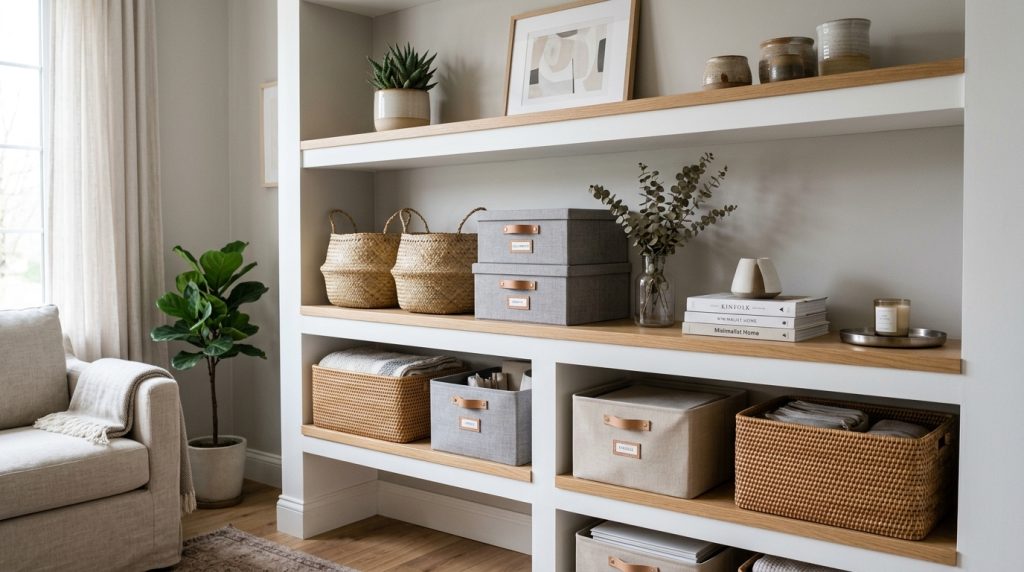
Functional storage shelf design prioritizes organization while maintaining a clean decorative appearance. This approach integrates storage solutions such as boxes, baskets, and containers into the shelf layout. The goal is to reduce visible clutter while keeping essential items accessible. In home decor, this method is widely used to combine practicality with visual order. It is particularly effective in small spaces where storage capacity is limited. By using structured containers, shelves can hold multiple items without appearing disorganized. This method supports efficient use of space and improves daily usability. Functional storage shelves are commonly used in living rooms, bedrooms, and workspaces. They provide a clear system for organizing items while still contributing to the overall aesthetic.
To create this setup, begin by identifying items that need storage. Group similar items together before placing them on the shelf. Select containers that match in size or material to maintain consistency. Place larger storage boxes on lower shelves to create a stable base. Use smaller containers on upper shelves for lighter items. Label containers if necessary to improve accessibility. Leave some open space for decorative objects to balance the functional elements. Ensure that frequently used items are placed within easy reach. This execution process creates a structured and efficient storage system that supports both organization and visual clarity.
Idea 7: Mixed Texture Shelf Styling
How to Create
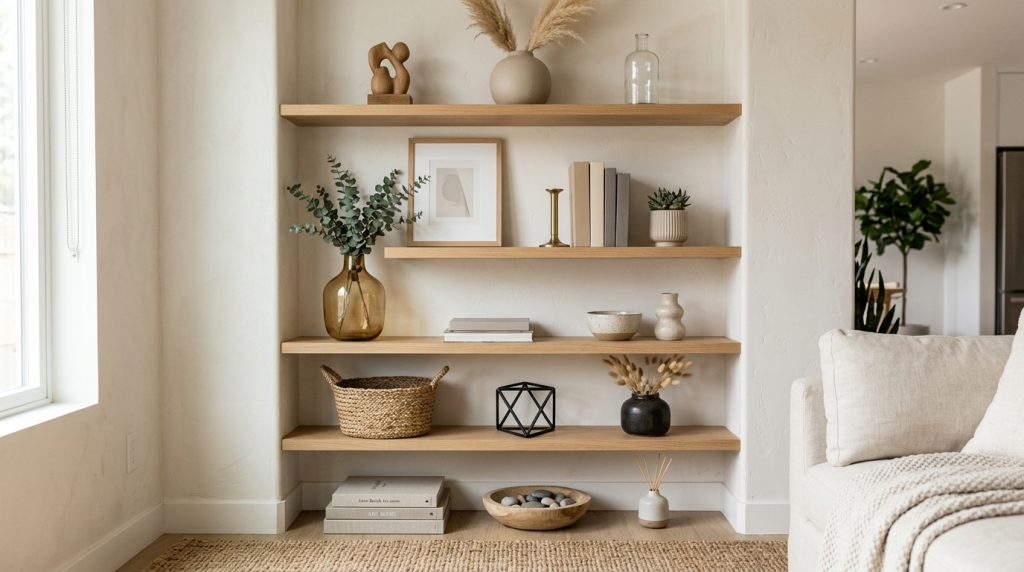
Mixed texture shelf styling focuses on combining different materials to create depth and variation. This approach uses contrasts between surfaces such as wood, glass, metal, and fabric. Each material contributes a unique visual quality, making the shelf more dynamic. In modern design, texture plays a key role in enhancing visual interest without relying on excessive decoration. This method is effective in neutral color schemes where variation is achieved through material differences rather than color contrast. Mixed texture styling is often featured in Pinterest ideas because it creates a balanced and layered appearance. It works well in both contemporary and transitional interiors. By combining textures, shelves can appear more engaging while maintaining a structured layout.
To implement this method, start by selecting items made from different materials. For example, combine a wooden object with a glass piece and a metal accent. Arrange these items in small groups to highlight contrast. Avoid placing similar textures directly next to each other. Instead, alternate materials to create variation across the shelf. Maintain a consistent color palette to prevent visual overload. Use soft materials such as fabric or woven elements to balance harder surfaces. Adjust spacing to ensure each texture is clearly visible. This step by step approach results in a well-balanced shelf that emphasizes material diversity while maintaining organization.
Idea 8: Vertical Space Optimization Shelves
How to Create
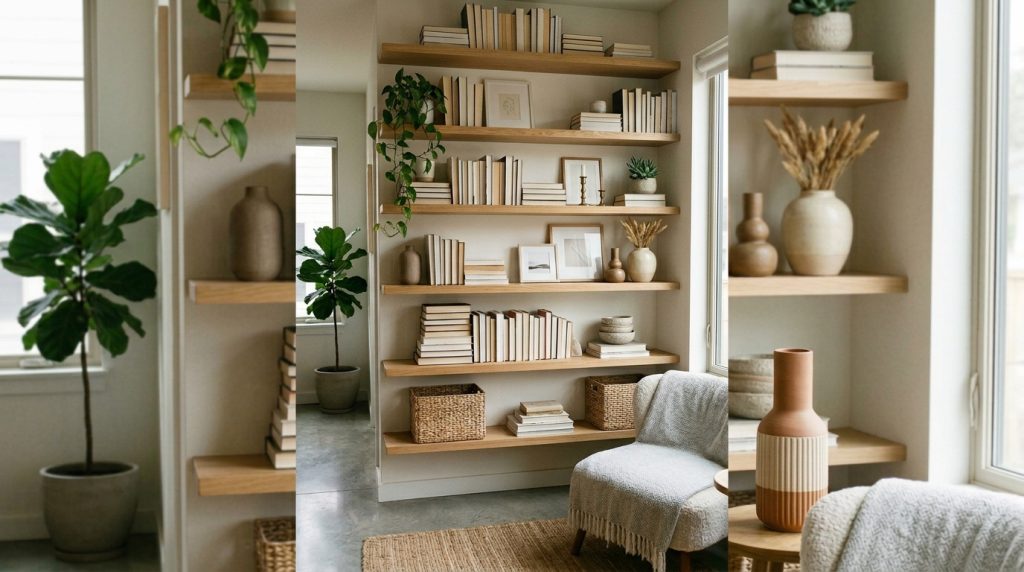
Vertical space optimization focuses on maximizing the height of shelves to improve storage and display capacity. This method is particularly useful in small spaces where horizontal area is limited. By using the full vertical dimension, shelves can hold more items without increasing their footprint. This approach is common in compact home decor setups and organization systems. Vertical arrangement also creates a sense of height, making the room appear larger. Items are stacked or layered in an upward direction, which enhances efficiency. This method supports both storage and decorative purposes, making it suitable for various room types. It is widely used in beginner friendly projects because it requires simple adjustments rather than structural changes.
To create this setup, begin by placing taller items at the back or ends of the shelf. Use stackable elements such as books or boxes to build height. Add smaller items in front to create depth. Ensure that taller objects do not block light or visibility. Use vertical dividers or risers if additional structure is needed. Maintain balance by distributing height evenly across the shelf. Avoid stacking items too high to prevent instability. Review the arrangement from a distance to ensure proportion is consistent. This step by step method allows efficient use of vertical space while maintaining a clean and organized appearance.
Idea 9: Personal Display Shelf Styling
How to Create
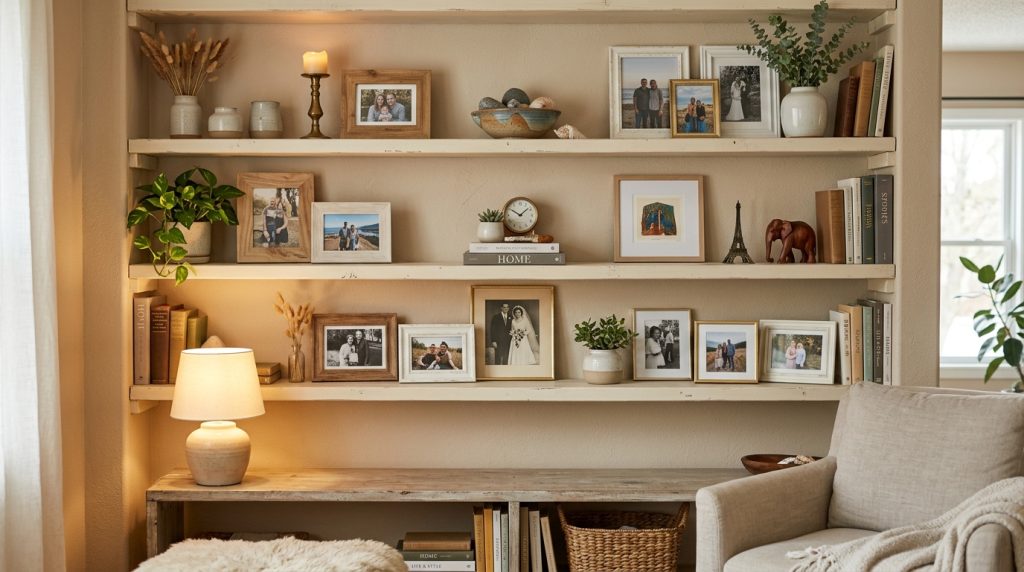
Personal display shelf styling focuses on showcasing meaningful items in an organized manner. This approach integrates personal objects such as photos, keepsakes, and small collections into the shelf design. The goal is to create a display that reflects individual preferences while maintaining structure. In home decor, personal elements add character and uniqueness to a space. This method is commonly seen in Pinterest ideas where shelves are used to tell a visual story. However, proper arrangement is essential to prevent clutter. Each item should have a defined place and contribute to the overall composition. Personal display shelves are suitable for living rooms, bedrooms, and entry areas. They combine emotional value with organized presentation.
To set up this arrangement, start by selecting a limited number of personal items. Choose pieces that vary in size and shape to create visual interest. Arrange items in small groups rather than spreading them evenly. Use frames or containers to unify the display. Place larger items at the back and smaller ones in front. Maintain spacing between groups to avoid overcrowding. Rotate items periodically to keep the display updated. Ensure that the overall arrangement remains balanced and consistent. This execution process allows personal items to be displayed clearly while preserving organization and aesthetic appeal.
Idea 10: Seasonal Rotation Shelf Decor
How to Create
Seasonal rotation shelf decor involves updating shelf arrangements based on different times of the year. This method keeps the space visually fresh without requiring permanent changes. It allows flexibility in decoration while maintaining a consistent structure. Seasonal elements may include changes in color, materials, or decorative themes. This approach is widely used in Pinterest ideas because it provides continuous inspiration. It also supports creative expression through simple updates. Seasonal rotation is practical because it reuses existing items with minor adjustments. It works well in living spaces where visual variety is desired. By changing decor periodically, shelves remain relevant and engaging.
To apply this method, begin by selecting a base arrangement that remains constant. Identify a few items that can be replaced during each season. For example, change colors or textures to reflect seasonal variation. Store unused items in labeled containers for easy access. Replace decorative elements while keeping the overall layout stable. Ensure that new items fit within the existing structure. Avoid adding too many elements at once. Review the arrangement after each update to maintain balance. This step by step process ensures that seasonal changes are implemented smoothly without disrupting organization.
Common Beginner Mistakes and How to Avoid Them
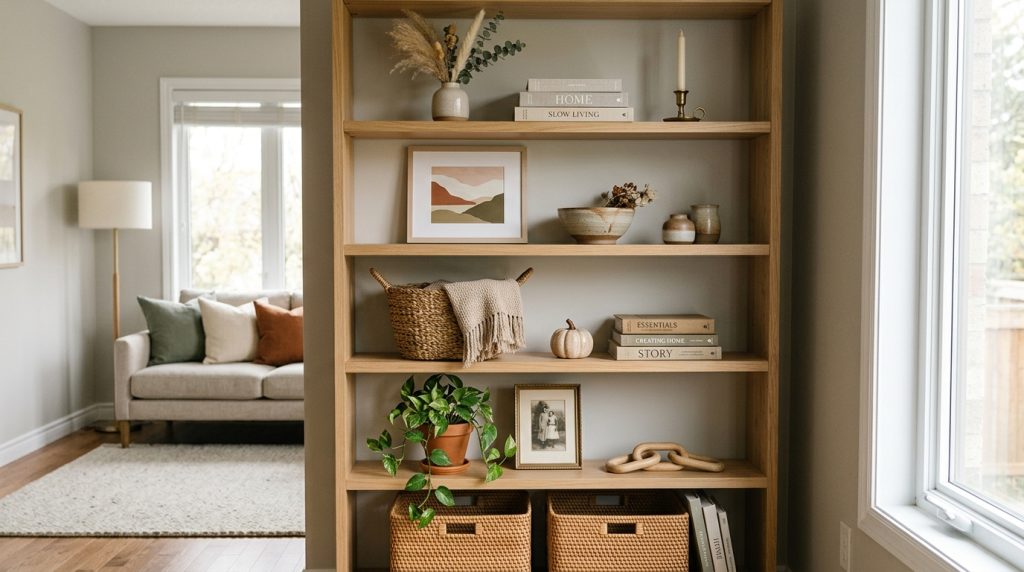
One common mistake in shelf decoration is overcrowding. Placing too many items on a single shelf reduces clarity and makes the arrangement appear disorganized. To avoid this, limit the number of objects and maintain visible spacing. Another issue is lack of planning. Without a clear layout, items may appear randomly placed. Preparing a simple arrangement plan helps maintain structure. Inconsistent color use is another problem. Mixing unrelated colors can create visual confusion. Selecting a defined color palette improves cohesion. Incorrect scaling is also a frequent mistake. Using objects that are too large or too small disrupts balance. Choose items that fit the shelf dimensions appropriately. Poor alignment can make shelves look uneven. Adjust item positions carefully to maintain symmetry or intentional asymmetry. Ignoring functionality is another issue. Shelves should remain usable, not purely decorative. By addressing these mistakes, beginners can create a clean and effective shelf setup.
Practical Tips for Better Results
For better shelf decoration results, start with a clear plan before placing items. Group objects by type, size, or color to simplify arrangement. Use odd-number groupings such as three items to create natural balance. Maintain consistent spacing between objects to improve readability. Combine different heights to avoid a flat appearance. Place heavier or larger items at the base for stability. Use negative space intentionally to highlight key elements. Keep frequently used items accessible to maintain functionality. Clean shelves regularly to preserve a polished look. Adjust arrangements gradually instead of making large changes at once. Observe the setup from different angles to ensure balance. These practical steps improve both organization and aesthetic quality. Consistent application of these techniques leads to a more refined and effective shelf decoration.
Styling, Presentation, or Organization Ideas
Styling shelves requires attention to both arrangement and presentation. Start by defining a visual theme that aligns with the room’s design. This may include a minimalist style, neutral tones, or layered textures. Arrange items in clusters to create focal points. Use background elements such as wall color or texture to enhance visibility. Incorporate vertical and horizontal elements to add variation. Maintain alignment across shelves to ensure consistency. Presentation also involves lighting. Proper lighting can highlight objects and improve depth perception. Organization should remain a priority. Keep similar items grouped together and avoid mixing unrelated elements. Rotate decorative items periodically to maintain freshness. By combining styling and organization, shelves can function as both storage and display units.
Budget or Time Planning
Effective budget and time planning ensures that shelf decoration remains manageable. Start by assessing available materials before purchasing new items. Reuse existing objects to reduce costs. Plan the arrangement in advance to avoid unnecessary changes. Allocate time for sorting, cleaning, and organizing items before styling. Break the process into smaller steps to maintain efficiency. For example, complete one shelf at a time rather than the entire unit at once. Set a clear budget for additional materials if needed. Choose versatile items that can be reused in different arrangements. Avoid rushing the process, as careful placement improves results. This structured approach helps complete the project efficiently while maintaining control over costs and time.
Creative Expansion and Advanced Inspiration
After completing basic shelf decoration, additional creative ideas can enhance the setup further. Consider combining shelves with wall niches to create layered displays. Add background panels or textures to increase depth. Experiment with asymmetrical layouts for a more dynamic appearance. Introduce lighting elements to highlight specific sections. Use modular shelves that can be rearranged as needed. Explore themed arrangements based on color, material, or function. Advanced setups may include integrating shelves with workspace or storage systems. Expand vertically by adding additional shelves above existing ones. These creative ideas allow continuous improvement and adaptation. By building on basic techniques, shelf decoration can evolve into a more advanced and personalized home decor feature.