10 Work From Home Set Up Ideas
Introduction
Creating a functional and visually appealing workspace at home has become an essential part of modern living. A well-designed work-from-home setup supports productivity, reduces distractions, and helps maintain a structured routine. Many Pinterest ideas focus on combining comfort, organization, and aesthetic value into one cohesive workspace. This article explains how to build effective home office setups using practical, beginner friendly methods. Readers will learn how to plan their space, select suitable materials, and implement creative ideas that improve both efficiency and visual appeal. Each section focuses on actionable steps, ensuring that every idea can be recreated without advanced skills or expensive tools. The goal is to provide clear guidance for building a workspace that aligns with daily tasks while maintaining a clean and organized environment. These ideas also emphasize DIY solutions, making them accessible for different budgets and room sizes. By following this structured approach, anyone can create a workspace that supports long-term productivity and comfort.
Why This Idea Is Trending or Useful
Work-from-home setups have become a major source of inspiration across Pinterest due to their practical value and adaptability. People are looking for ways to transform small or unused spaces into efficient work areas. These setups focus on maximizing limited space while maintaining a modern design that feels comfortable and motivating. The popularity of DIY projects has also increased, allowing individuals to create customized workstations using simple materials and tools. This makes the process accessible for beginners who want an easy project without complex construction. In addition, aesthetic appeal plays a key role, as organized and visually balanced workspaces improve focus and reduce stress. Minimalist style setups are especially popular because they reduce clutter and create a clean working environment. These ideas are also flexible, meaning they can be adjusted for different room layouts and personal needs. Overall, work-from-home setups are trending because they combine functionality, organization, and creative expression in a practical and achievable way.
Materials and Preparation
Before starting any work-from-home setup, it is important to gather the right materials and plan the layout carefully. Basic materials include a sturdy desk, a comfortable chair, storage containers, lighting fixtures, and cable management tools. Additional items such as wall shelves, organizers, and decorative elements can enhance both function and appearance. Tools required for most DIY setups include a measuring tape, screwdriver, drill, and level. Preparation begins with selecting a suitable location that has enough natural light and minimal distractions. Measuring the available space ensures that furniture fits correctly without overcrowding the area. Planning should also include identifying storage needs, such as drawers or shelves for documents and supplies. It is useful to create a simple layout sketch to visualize placement before setting up the workspace. Proper preparation helps avoid common issues such as poor lighting, limited movement space, and disorganized storage. By organizing materials and planning each step, the setup process becomes more efficient and results in a balanced and functional workspace.
Idea 1: Minimalist Desk Setup
How to Create
A minimalist desk setup focuses on simplicity, functionality, and clean design. This approach removes unnecessary items and keeps only essential tools within reach. The goal is to create a distraction-free environment that supports productivity and clear thinking. A neutral color palette is commonly used, including shades of white, gray, or natural wood tones. The desk surface should remain mostly clear, with space allocated for a laptop or monitor, a notebook, and basic stationery. Storage is often hidden, using drawers or under-desk organizers to maintain a clutter-free look. This type of setup is especially useful for small spaces, as it makes the area feel larger and more open. Minimalist workspaces also align with modern design trends seen in many Pinterest ideas, emphasizing order and efficiency. By focusing on essential elements, this setup supports both productivity and visual balance.
To create this setup, start by selecting a simple desk with a flat surface and minimal detailing. Remove all non-essential items from the workspace and categorize what is necessary for daily tasks. Use small organizers or drawer dividers to store supplies neatly. Install cable management clips or sleeves to keep wires out of sight. Add a single desk lamp for focused lighting and ensure it is positioned to reduce glare. If needed, mount a small shelf above the desk to hold a few essential items without crowding the surface. Keep decorative elements limited, such as one plant or a framed print. This step by step approach ensures the workspace remains functional while maintaining a clean and organized appearance.

Idea 2: Corner Workspace Optimization
Step-by-Step Guide
A corner workspace uses underutilized areas of a room to create an efficient work zone. This setup is ideal for small apartments or shared spaces where dedicated rooms are not available. Corners naturally provide boundaries, which helps define the workspace without additional partitions. This layout improves organization by keeping work items contained within a specific area. It also allows for better use of vertical space through shelves or wall-mounted storage. Many Pinterest ideas highlight corner setups because they are practical and adaptable to different room sizes. This approach supports a focused work environment while maintaining the overall layout of the room.
To set up a corner workspace, begin by measuring both walls to determine the maximum desk size that fits comfortably. Choose an L-shaped desk or a compact rectangular desk that aligns with the corner. Install floating shelves above the desk to store books, documents, or decorative items. Position the chair so that there is enough space for movement without hitting nearby furniture. Use vertical organizers to maximize storage without taking up floor space. Add proper lighting, such as a wall-mounted lamp or adjustable desk light, to ensure visibility. Keep cables organized using clips or trays attached to the desk underside. This method creates a practical and organized workspace using an often-overlooked area.

Idea 3: Floating Desk Setup
How to Make
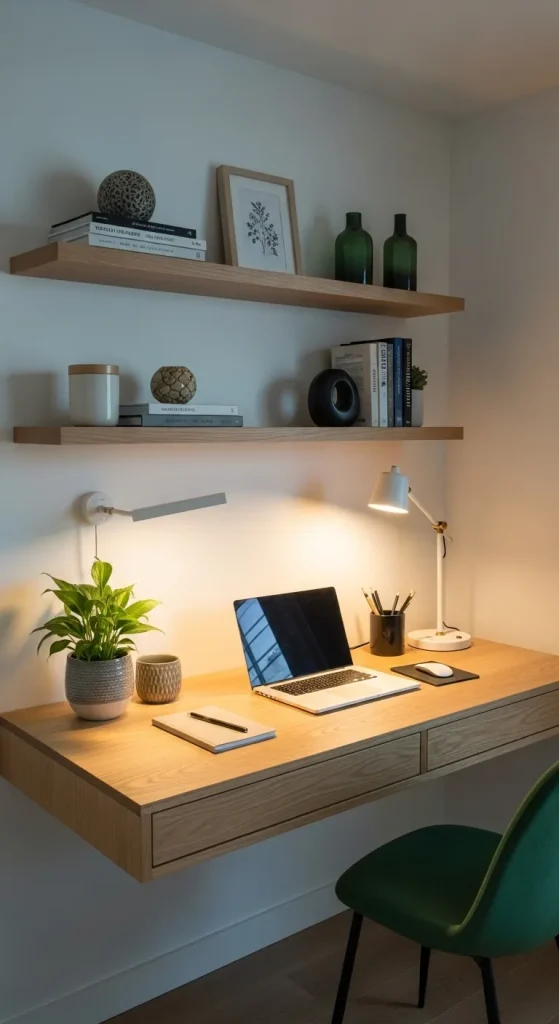
A floating desk setup is designed to save space and create a clean, modern look. This setup involves mounting a desk directly onto the wall, eliminating the need for legs or bulky furniture. It is ideal for small rooms where floor space is limited. The floating design also contributes to a minimalist style, making the area feel open and uncluttered. This type of setup is commonly seen in modern home decor inspiration because it combines functionality with a sleek appearance. It is especially useful for individuals who prefer a compact and efficient workspace.
To create a floating desk, start by selecting a sturdy wooden board or pre-made tabletop. Use wall brackets or a mounting system that can support the weight of the desk and equipment. Measure and mark the desired height, ensuring it aligns with a comfortable sitting position. Secure the brackets into wall studs for stability. Once installed, place essential items such as a laptop, keyboard, and small organizer on the surface. Add a wall-mounted shelf above the desk for additional storage. Use cable clips to manage wires along the wall. This step by step method results in a space-saving and visually clean workspace.
Idea 4: Dual Monitor Productivity Setup
Execution Process
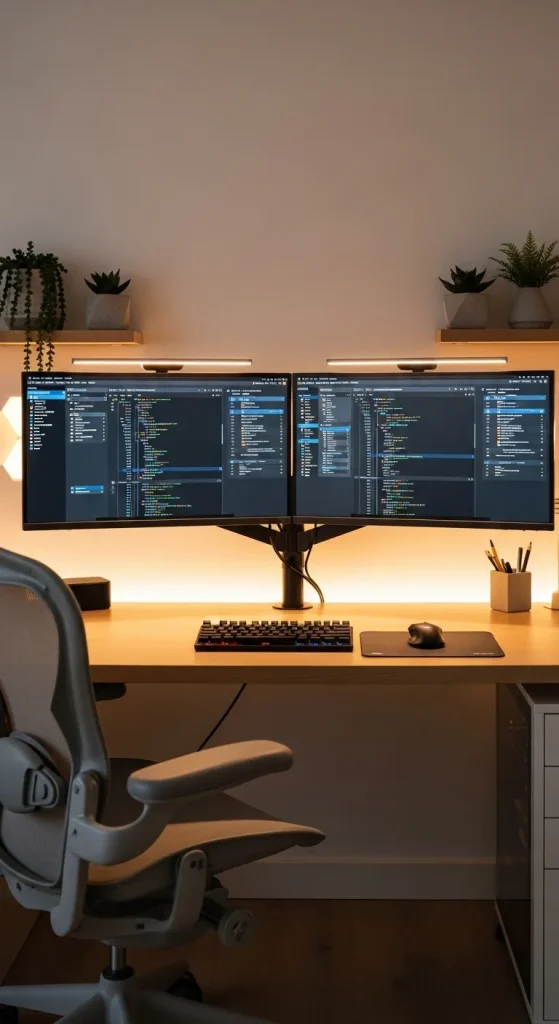
A dual monitor setup increases productivity by allowing multiple tasks to be displayed simultaneously. This setup is useful for work that involves research, data entry, or design tasks. It reduces the need to switch between windows, improving efficiency and workflow. Many modern design setups on Pinterest include dual monitors as part of a professional workspace. The arrangement should prioritize comfort and proper alignment to avoid strain during long work hours.
To build this setup, start by selecting two monitors of similar size for consistency. Position them at eye level using adjustable stands or a monitor arm. Ensure both screens are aligned horizontally to prevent neck strain. Connect the monitors to your computer using compatible cables and adjust display settings for extended screens. Use a wide desk to accommodate both monitors comfortably. Add a keyboard and mouse in a central position for easy access. Manage cables using clips or a cable tray to keep the area organized. This setup improves workflow and creates a structured and efficient workspace.
Idea 5: Natural Light Workspace
Setup Method
A natural light workspace focuses on positioning the desk near a window to maximize daylight exposure. Natural light improves visibility and reduces eye strain compared to artificial lighting. It also enhances the overall aesthetic, making the workspace feel open and inviting. This type of setup is widely featured in Pinterest inspiration because it creates a bright and refreshing environment.
To create this setup, place the desk parallel or perpendicular to a window to avoid glare on screens. Use sheer curtains to control light intensity without blocking it completely. Arrange the monitor so that sunlight does not reflect directly onto the screen. Add a small plant or decorative item to complement the natural setting. Ensure that artificial lighting is available for evening work. This approach creates a balanced and comfortable workspace with improved lighting conditions.

Idea 6: Compact Foldable Workspace
How to Create
A foldable workspace is designed for flexibility and space-saving. This setup allows the desk to be folded away when not in use, making it suitable for multi-purpose rooms. It is especially useful in small homes where space needs to be shared. The design supports organization and efficiency while maintaining a clean environment.
To build this setup, choose a wall-mounted foldable desk or create one using hinges and a wooden board. Install it securely on a wall at a comfortable height. Add a foldable chair that can be stored easily. Use wall-mounted organizers to keep supplies accessible without occupying desk space. Ensure that all items can be stored neatly when the desk is folded. This method creates a practical and adaptable workspace.

Idea 7: Cable-Free Organized Desk
Step-by-Step Guide
A cable-free desk setup focuses on reducing visible wires to create a clean and organized workspace. This improves both safety and visual appeal. Many modern setups emphasize cable management as a key element of organization.
To achieve this, use wireless devices such as keyboards and mice where possible. Install cable trays under the desk to hold power strips and wires. Use clips or sleeves to bundle cables together. Position devices close to power sources to minimize wire length. Label cables for easy identification. This setup creates a neat and distraction-free workspace.

Idea 8: Wall Storage Workspace
How to Make
A wall storage workspace uses vertical space to organize supplies and reduce desk clutter. This approach is ideal for small areas where floor space is limited. It keeps essential items within reach while maintaining a clean desk surface.
To create this setup, install shelves, pegboards, or wall organizers above the desk. Arrange items based on frequency of use. Use hooks or containers to store tools and accessories. Keep heavier items on lower shelves for stability. This method improves organization and efficiency.

Idea 9: Cozy Aesthetic Workspace
Setup Method
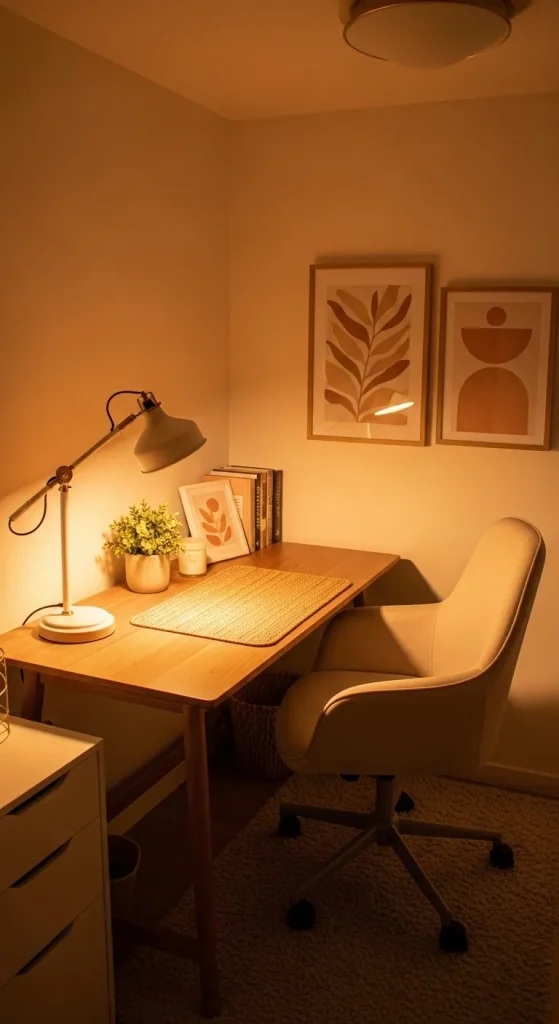
A cozy workspace focuses on comfort and a warm atmosphere. It combines functional elements with soft textures and subtle decoration. This type of setup is popular in aesthetic Pinterest ideas.
To build this, add a comfortable chair with proper support. Use soft lighting such as a desk lamp or warm bulbs. Include a rug or cushion for added comfort. Keep the workspace organized while adding minimal decorative elements. This creates a balanced and comfortable environment.
Idea 10: Multi-Functional Workspace
Execution Process
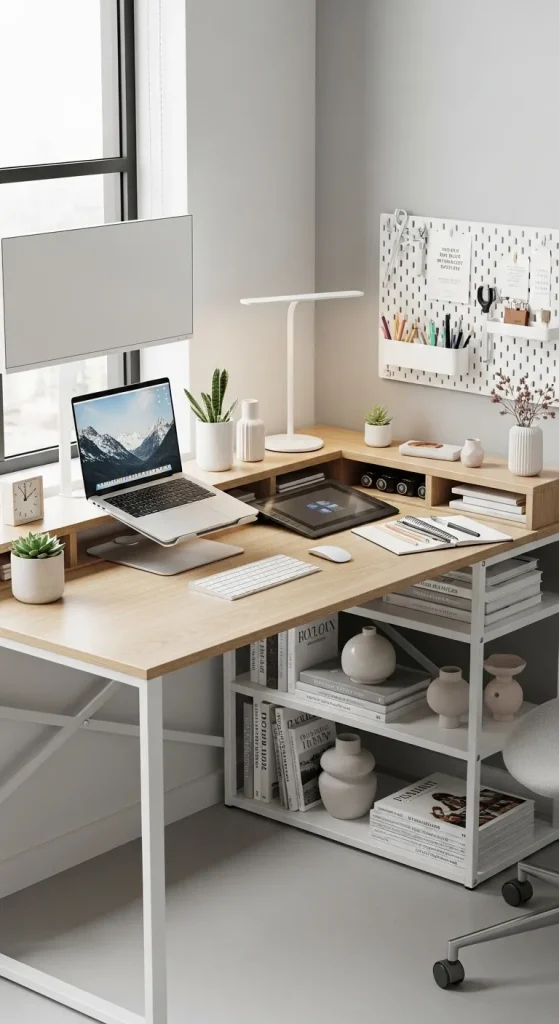
A multi-functional workspace is designed to serve multiple purposes, such as work, study, and creative projects. This setup maximizes efficiency by combining different functions in one area.
To create this, use a desk with storage compartments or adjustable features. Organize items based on usage categories. Keep tools for different tasks separated but accessible. Ensure that the layout allows easy transition between activities. This setup supports flexibility and efficient use of space.
Common Beginner Mistakes and How to Avoid Them
Many beginners make mistakes such as overcrowding the workspace, poor lighting, and lack of planning. Overloading the desk with unnecessary items reduces efficiency and creates distractions. Choosing the wrong desk size can also limit movement and comfort. Poor lighting leads to eye strain and reduced productivity. These issues can be avoided by planning the layout carefully and selecting appropriate materials. Keeping the workspace simple and organized improves functionality.
Practical Tips for Better Results
Focus on maintaining a clean and organized workspace. Use storage solutions to reduce clutter and keep essential items accessible. Adjust desk height and chair position for ergonomic comfort. Regularly review the setup and make improvements as needed. Small adjustments can significantly improve productivity.
Styling, Presentation, or Organization Ideas
Use consistent colors and simple decorative elements to create a cohesive look. Arrange items symmetrically for balance. Keep frequently used items within easy reach. Use containers or trays to organize small items. This enhances both functionality and visual appeal.
Budget or Time Planning
Plan the setup based on available budget and time. Start with essential items and add improvements gradually. Use DIY solutions to reduce costs. Allocate time for each step to avoid rushed decisions. This ensures an efficient and manageable setup process.
Creative Expansion and Advanced Inspiration
Explore advanced ideas such as smart lighting, adjustable desks, or integrated storage systems. Experiment with different layouts to find the most efficient arrangement. Combine multiple ideas to create a personalized workspace. Continuous improvement helps maintain a productive and inspiring environment.